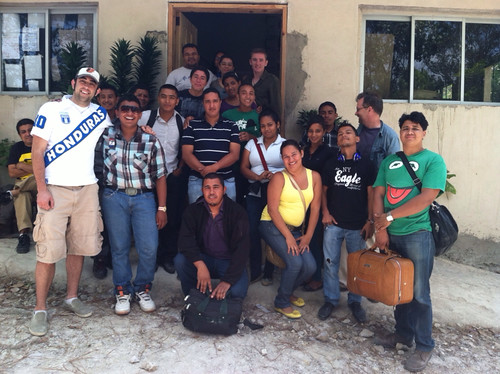
And please do check out the blog series I curated with NEXTChurch that has incredible posts by dear friends with whom I shared the venture of a lifetime: https://nextchurch.net/blog/ . My post will be shared here and through the NEXTChurch platforms later this month.
Wednesday, July 3, 2019
Life Is Pilgrimage: Collection of Reflections from Recent Holy Land Excursion
And please do check out the blog series I curated with NEXTChurch that has incredible posts by dear friends with whom I shared the venture of a lifetime: https://nextchurch.net/blog/ . My post will be shared here and through the NEXTChurch platforms later this month.
Tuesday, November 20, 2018
A People Led in a New Direction: Deuteronomy 2:1-8 & Matthew 4:18-22
This sermon was delivered at the New Spirit Community Presbyterian Church in Southwest Philadelphia as they celebrate 22 years of faithfulness. The full text of the sermon can be found below.
Thursday, September 29, 2016
Money, Mission, Media: The Beginnings of an On-Going (Ecumenical) Conversation
What would it look like to host a conversation on the varied intersections of stewardship and media and all things ministry in the twenty-first century?
How could we as Presbyterians and Lutherans model ecumenical collaboration critical for church witness in our local cities and neighborhoods?
Would it be possible to host a conversation that would at least acknowledge, if not reduce, the anxiety that surrounds new media and the here-to-stay digital world?
Dare we suggest the possibility of stewardship and digital platforms for generosity and community formation as sacramental, means to encounter God's grace and proclaim the gospel?
As local PCUSA and ELCA ministers, we raised these questions and more to one another over coffee and the occasional beer. We also knew these were questions others in our synod, presbytery, and related congregations were asking.
So, with the respective support of our communities, we recruited voices in the church who are exploring the edges of ministry in a digital world, Adam Copeland, Mihee Kim-Kort, and Keith Anderson, pulled together a panel of practitioners for a fishbowl discussion, and launched #MoneyMissionMedia: Insights & Strategies for 21st Century Ministry. Lutheran Theological Seminary of Philadelphia even graciously offered to host.
We initially targeted 75 conversation partners across both the local ELCA Synod and the Presbytery of Philadelphia.
On Tuesday, over 200 showed up.
I learned much. What I most valued was the praxis of ecumenical collaboration that continues to deconstruct any territorialism that impinges upon our larger Christian witness in and for the world. Even more, the conversations were raw, honest, deeply theological, and rooted in a commitment to contextualized expressions of the gospel.
As our Presbytery's own Rev. Ruth Santana-Grace noted in the opening remarks, "We are indeed in a new Pentecost moment."
May the church dare embrace it.
Here are a few resources from the gathering:
My tweets from that day.
Summary article from the Southeastern Pennsylvania Synod (ELCA)
Adam Copeland Presentation (Facebook Live)
Mihee Kim-Kort Presentation (Facebook Live)
Fishbowl Conversation with Local Practitioners (Facebook Live)
Keith Anderson Presentation (Facebook Live)
Closing Liturgy
Article by the Southeastern Pennsylvania Synod, ELCA
Related post: http://gregklimovitz.blogspot.com/2015/08/technology-as-sacramental-means-of.html
Monday, July 27, 2015
Neighborhood Narratives and Cultural Exegesis: Churches Moving from Pulpit to Pavement
Tuesday, October 14, 2014
Reverse Mission: Real Mission Partnership Creates Opportunities to Flip the Script of Hospitality and Service
This past summer, we were in the backyard of Marlon and Diana's Guaimaca home when I experienced one of the more precious demonstrations of hospitality. The youth and leaders from our church were invited to lunch in their garden as Marlon and Diana's young son walked by me with his t-shirt curled into a pouch filled with fresh-picked starfruit. With eyes wide and grin even wider, Marlonito approached the table and unfolded the bottom of his shirt as starfruit rolled across and off the foldout tables. Our young host remembered from the previous summer how much his American friends enjoyed picking from their trees and tasting the best of Honduras' produce, so he was more than prepared for our visit this time around.
Hospitality and welcome was offered by the next generation of missional partnership.
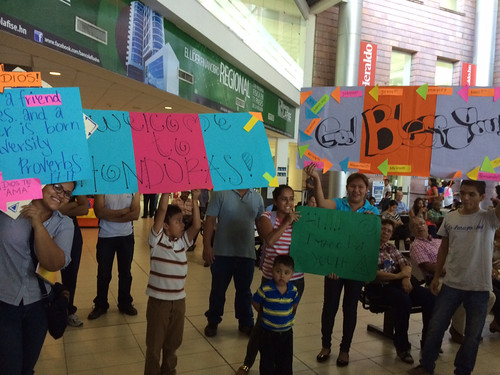
Then there was last Monday. The dream had been realized of reversing mission and welcoming our friends from Honduras into our community as we were gathered in my living room. While we were chatting about this growing partnership, my son and daughter desperately wanted to take all of us out and show our guests around their stomping grounds. So like little pilgrims, my son and daughter lead us on one of their favorite adventures, briskly walking about twenty yards ahead of us and towards the creek behind our townhouse.
Noah and Lily had made their way into the woods, briefly out of sight, although their tiny footsteps and voices were sure to be heard in the neighboring town. As Marlon, Alex, and I drew closer we encountered a familiar display of hospitality and welcome. Noah's shirt, much like Marlonito's this past summer, had been curled up and filled to overflowing with gifts. But due to the lack of suburban vegetation, instead of starfruit he delivered walnuts. Noah had gathered as many of these "walnut balls" I recently introduced him and his sister to and handed them out, one-by-one, to his new friends from Honduras. "One for you and one for you and for you," he said to each visitor. Then he showed them how to throw nature's baseballs into the creek, each toss met with a jubilant "yes!"
I froze. I am pretty sure a few tears welled up and trickled out of my eyes. My son and daughter understood partnership. They understood friendship. They understood one of the most basic elements of mission and discipleship: sharing the joys, gifts, resources, and discoveries with one another. Marlonito knows this simple truth quite well, too.
Our children no longer knew Daddy's friends as abstract people. Honduras was no longer somewhere Daddy went every summer an airplane ride away. Honduras and the people who lived there were now their friends and family, too. Actually, my daughter claimed two of them were "her girls."
If I have learned anything from the Honduras Youth-to-Youth Missional partnership it is this: mission must be reversed if ever to become true partnership. If the church desires to move beyond paternalism and less-than dignified attempts to love and serve our neighbors in other parts of the world, we must be willing to extend invitations to our friends in these communities to serve and explore alongside us in our cities, neighborhoods, communities, and churches. We must be willing to return the favor of hosting and become recipients of those who are rarely offered a chance to visit where their American brothers and sisters practice the mission of God and witness of the church.
Real Christian mission must be willing to flip the script and exchange parts if partnership is truly the desired goal. Failure to do so will only further the "us and them" mentality. That's something neither I nor Marlon want for our children. Thanks be to God we have been able to expose them them to something different. I only pray our kids will one day be able to meet.
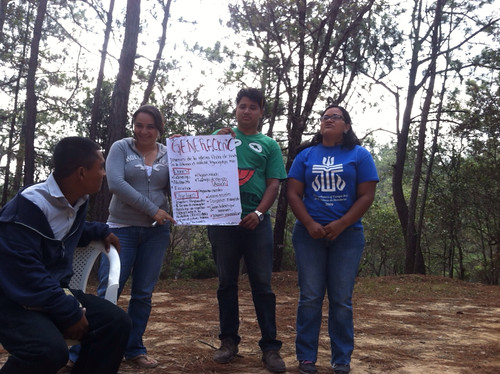
After all, they seem to understand partnership best.
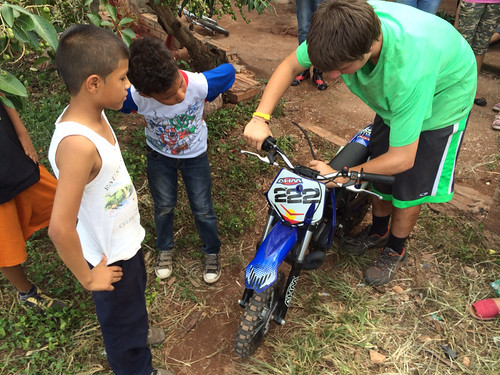
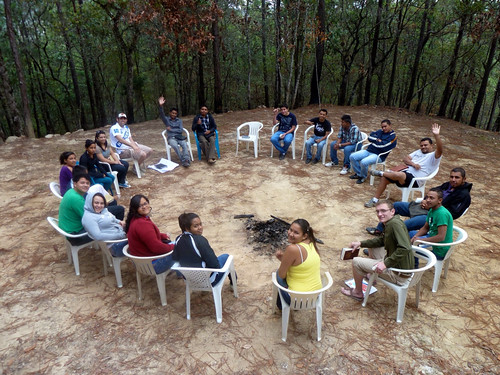
I could write endlessly about our extended weekend together, which is no doubt a highlight of my 12 plus years in youth ministry. But I think the only way to come close to capturing the joy is through selected photos:
Click "Honduras Tab" for other related posts, most notably "Declaration of Interdependence" and "The Kingdom of God is Like Mango Trees in Guaimaca."
Saturday, July 19, 2014
Good News (and bad news) in Honduras: Partnership and Child Refugees
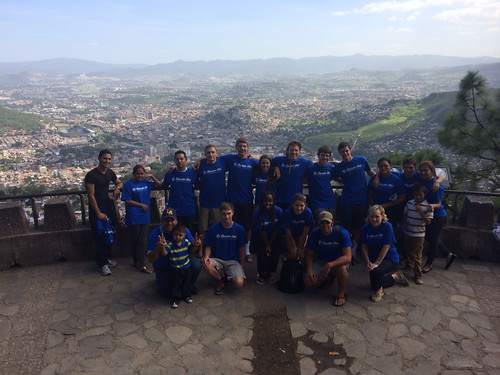
Our team was packing for our morning flight when friends from Tegucigalpa popped in for an evening surprise. They wanted to cap off a week of service, play, worship, and shared learning with some cake and conversation. As we celebrated year four of the growing youth-to-youth missional partnership between the Presbytery of Honduras and the Imago Dei Youth Ministry, one of the leaders offered an honest reflection and bold request.
"When your family and friends google Honduras they will learn about murders, poverty, corruption, and difficulties with education. Please share with them the good news about Honduras, too."
So, here's the good news.
Honduras is a beautiful country. The landscape and vegetation begs the question, is this what Eden was like?
Honduras is saturated with passionate churches whose members demonstrate what can and should happen when God's people share the burdens of one another and hold all things in common.
The youth of Honduras are eager to engage broader visions of what it means to be called a community and congregation at the forefront of God's mission in and for the world. These same young people are even asking questions about how to begin conversations about justice advocacy, peace making, and social development.
I also have strong friendships with Hondurans who long to become pharmacists, oncologists, engineers, and social workers so they can improve the country they call home and the livelihoods of those whom they call neighbors.
Hondurans also know how to have a good time. Want evidence? Just check out the video of our week together.
Now for the bad news, in case you did not already know.
Honduras has become synonomous with instability, injustice, drug trafficking, police corruption, economic distress, political perversion, and a national government unable to make significant dents in any or all of the above. This beloved nation, and my home away from home, has even earned the dreaded title, "murder capital of the world."
You could say Honduras is a developing nation whose socio-political development is slow at best.
These are all reasons why unaccompanied children are fleeing at such a rapid pace. Despite the rumors to the contrary, Honduran parents are sending their kids on dangerous pilgrimages to surrounding nations like the United States not as hopeful immigrants but as desperate refugees.
While we may be tempted to once again use these young ones, to whom the kingdom of God belongs, as pawns in another political game perpetuated by the media, the issue at stake here is not immigration reform.
Well, not entirely.
We are talking about a refugee crisis. Many Honduran parents believe there is lower risk in shipping their children off to either a neighboring nation or one a flight away versus remain in their neighborhoods where violence is on the rise.
So while we may want to focus on American legislation and rash policies and procedures for deportation, you can't cure cancer with Tylenol. If we make this issue only about us as Americans and our bent in one partisan drection or another, parents of these children will not stop their pursuit of the safety and future of their children. They will just find other and, quite possibly, more detrimental alternatives.
That's because, by and large, these families are not looking for American citizenship or tax-free employment, rather praying for relief and rescue of their kids whom they love. Which means our focus as individuals and communities, churches and politicians, must become the growing tumor of violence in Honduras that breeds on internal socio-political corruption and results in unaccompanied child refugees. We must also explore ways to exercise hospitality and extend international pastoral care until a cure is found.
If we make this about anything else the result will be catastrophic, leaving thousands of children as victims of a poorly played political game.
I can't imagine news any worse. I want good and even better news for Honduras. So do my friends.
Helpful Resources
http://www.bbc.co.uk/news/world-latin-america-28339147
http://www.pcusa.org/news/2014/7/7/response-unaccompanied-children/
http://www.pcusa.org/news/2014/7/18/pcusa-leaders-offer-prayer-use-sunday/
http://gregklimovitz.blogspot.com/2013/07/the-kingdom-of-god-is-like-mango-tree.html
Read Previous Post: http://gregklimovitz.blogspot.com/2014/07/declaration-of-interdependence-early.html
Sunday, July 13, 2014
Declaration of Interdependence: Early Reflections on Honduras Youth Partnership
"If we embrace the notion that all of life is interdependence, then we must believe that everyone is our neighbor- regardless of race, social status, or geography."
Bruce Main, Why Jesus Crossed the Road
One of my greatest joys as a youth pastor is being able to learn alongside teenagers. As I type this, I sit at a table with three other youth intensely journeling about their experiences as mission partners with friends in Honduras. These three young disciples, along with the many others who have served here each summer since 2011, have taught me a great deal about love, curiosity, generosity, faith, Scripture, love, and what it can and does look like when we follow Jesus locally and globally.
They have taught me even as I have strived to teach them. We have leaned on one another.
As a youth pastor, I have learned to value interdepedence. Actually, I have declared it as an essential element of Chrisitan identity, community, discipleship, and mission. Youth and adults alike need each other as those who profess faith in and covenant to pursue a crucified and resurrected Jesus who is in the process of making all things new and right.
John H. Westerhoff is right, "One Christian is no Christian, for we cannot be Christian alone- we are created for communuty" (Will Our Children Have Faith 38).
Interdependence is one of many reasons Imago Dei Youth Ministry has been a part of the Honduras Youth-to-Youth Partnership since 2011. We hold the conviction that we not only need one another in the suburbs of Philadelphia, but also our brothers and sisters in places like Honduras. We need our "copartners in grace"* and the faithful witness of our friends who live in a cultural context different than our own. We need their unashamed commitment to the gospel, incarnations of genuine community throughout their national Presbytery, extensions of generous hospitality to visiting friends, and creative zeal as they develop new initiatives to care for their own and elevate the voice and passion of young people.
They also need us.
They need us not only to assist in fundraising for their creative projects, but also to remind them the church does not exist for self-serving purposes alone. They need us to remind them the church exists as an agent of personal, social, and systemic transformation. They need us to share our understandings of the kingdom and how we see the pursuit of justice as exercises in neighborly love. They need us to encourage their own pursuits of change within their congregations and communities who have silenced the voice of younger generations for far too long.
We actually need each other.
So this week we once again declare our interdependence. As we serve alongside one another in the construction of a retreat center and Eco-stoves, pray and read Scripture before and after soccer games, discuss critical issues of unaccompanied children fleeing to the U.S.** and others facing homelessness and addiction, and contemplate what it can mean to enhance conversations beyond summer trips, we remember we belong to one another and the God who made us both.
We may live miles apart, but we are still each other's neighbors. Actually, we are more. We are an interdependent family still growing into a shared identity and purpose.
This family is a young one, mostly made up of teenagers. Their communities depend upon them. Their churches depend upon them. I depend upon them. We all depend upon one another.
We cannot be Christian alone.
"If there is no friendship with the poor and no sharing of the life of the poor, then there is no authentic commitment to liberation, because love exists only among equals. Any talk of liberation necessarily refers to a comprehensive process, one that embraces everyone."
Gustavo Gutierrez, A Theology of Liberation
Notes
*Karl Barth translated Philippians 1:7, in reference to Paul's partnership with the churches in Philippi, this way, "I bear you in my heart as those who in my imprisonment, as also in my defense and declaration of the gospel, are all my copartners in grace" (Epistle to the Philippians).
**Learn more about the thousands of children fleeing Honduras in search of refuge from the violence and corruption within Honduras: http://www.pcusa.org/news/2014/7/7/response-unaccompanied-children/
***Read also: http://gregklimovitz.blogspot.com/2014/07/good-news-and-bad-news-in-honduras.html
Saturday, January 25, 2014
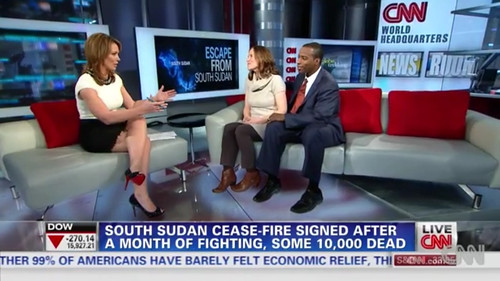
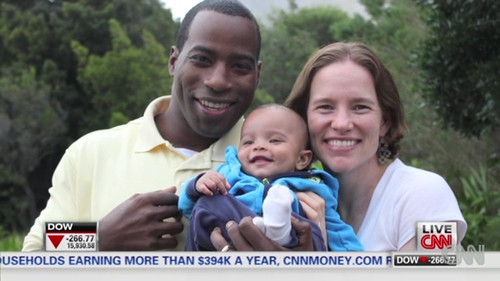
PCUSA Mission Co-Workers in South Sudan Interviewed on CNN
The young nation of South Sudan has continued to face internal violence, economic distress, and increasing concerns related to poverty, hunger, and socio-political infrastructure since declaring independence in 2011. I am grateful and encouraged by the work being done by World Mission and many others called to advocacy and peacemaking efforts. All reminders of the beautiful, faithful, complicated, and prophetic work being done by PCUSA World Mission near and far.
Please keep your prayers South Sudan, the Sudanese people, and all who work towards reconciliation, justice, education, and peace. For more information check out these links:
Rev. Shelvis and Rev. Nancy Smith-Mather and Presbyterian Mission Agency
Call for Prayer for South Sudan
Principle for RECONCILE Peace Institute in South Sudan
Liberation for South Sudan?
Saturday, July 20, 2013
The Kingdom of God Is Like a Mango Tree in Guaimaca: Reflections on Honduras Youth Partnership 2013
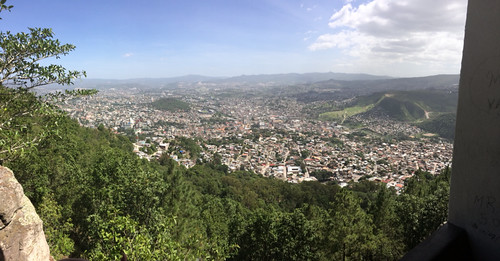
There are two prominent figures that overlook the market and downtown Tegucigalpa, Honduras. The first, El Cristo del Picacho, is located in a beautiful park with an incredible view of the capital city. It costs 10 Lempiras (roughly $.50) to see this Jesus, which seems to debunk any theology about salvation being free.
The second is a yellow house on the opposite hill, which is home to one of the more prominent drug lords in Honduras. Everyone knows he lives there; he simply has paid-off police and other law enforcement to ensure security for his residence and dealings.
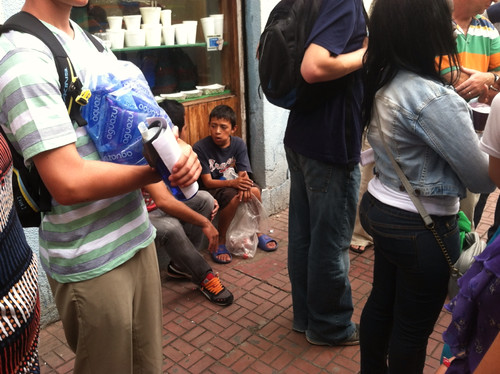
In between these two cultural "icons" is a plaza buzzing with activity. The streets of this plaza serve as residence for many of Honduras' most marginalized and ignored.
There are the "glue boys," homeless youth who flee domestic distress and develop addictions to yellow shoe glue that provides a cheap daily high. Most pay no attention to kids like Mil Años, a young boy nicknamed for his aged face that results from his addiction. Micah Project, instead, calls them family and extends them invitations into their community where they can be lifted from addiction, receive an education, and discover the love of God in Jesus.
The plaza is also home to a young leper, who sits at the main entrance of a Catholic Church. Our youth took notice and offered him hot food, cold water, and quite possibly the only expression of hospitality and affection he encountered all day. Talk about a story that will preach!
Then there are the severely physically handicapped, aged "glue boys," homeless old women, and a long line of others. As our youth walked with leaders from Micah Project throughout the streets of this Honduran Central Park, stories of Scripture came alive. It was almost too much for some of our youth.
And we remembered those overlooking the city, symbols of liberation and oppression. We were in the space between them, a very thin place where we could hear echoes of the benediction from the previous night's debriefing:
May God bless you with discomfort at easy answers, hard hearts, half-truths, and superficial relationships. May God bless you so that you may live from deep within your heart where God's Spirit dwells...And may God bless you with enough foolishness to believe that you can make a difference in this world, in your neighborhood, so that you will courageously try what you don't think you can do, but in Jesus Christ you'll have all the strength necessary." (Franciscan Blessing)
It is true, Honduras is a country in distress. The nation is plagued with political corruption, insufficient education, significant malnutrition, pervasive poverty, increasing drug-related violence, and a police force confused about who to defend- drug lords or vulnerable citizens?
It is also true that beauty, love, and hope are sprouting up like mango trees in the back yards of Guaimaca homes, an hour outside the urban center. If we are not paying careful attention, we may miss these stories and the sweet attestations to the kingdom of God falling from their branches.
Each day of our evolving youth-to-youth partnership in Honduras began and ended with cross and resurrection stories. Youth were invited to share where they encountered suffering and despair and where their eyes and ears were opened to signs of God's hope and redemption.
I am convinced this should become a daily, personal and corporate discipline. The temptation is to either fix our eyes on Cristo del Picacho and forget the drug lords wreaking havoc behind us or be overwhelmed by the drug lords and others just like him, unaware that Jesus has entered into real human suffering and promised all of us new creation.
The call of disciples of Jesus is to live in the spaces between Picacho and that yellow house on the hill, or at least make pilgrimages of partnership there, with an honest and awakened hope that this new creation can and must begin now.
And I am firmly convinced that this especially begins though the youth of our respective communities.
Here Are Some Resurrection Stories from Year Three of Our Partnership in Honduras
Tuesday, April 16, 2013
Are We Powerless? My Son's Seizure, Boston Marathon, and Brief Reflections on Nehemiah
This past January, I was in the middle of a church meeting when my wife's number showed up on my phone. My son's body temperature rapidly spiked and he had begun to seize. I will forever remember hitting triple digits and beating the ambulance home, ushering paramedics to my kids' room, and witnessing my wife on the floor with my son battling a febrile seizure. I experienced six of these fever-induced seizures as a child, each of which my mother vividly remembers. I am sure the same will be true for my wife and me.
While many affirm what was actually occurring in my son's little body was not as scary as it looked, the experience was nonetheless the most horrific I have had to date. We felt powerless. We feared there was nothing we could do.
Thankfully, our son recovered and within 24 hours was restored to his normal, mischievous, playful, and quirky self. Still, in those moments when we held him in his tiny hospital gown, restrained him as he received an IV, and even prayed for him and his body temperature to be restored to normal, my wife and I felt powerless.
The feeling of powerlessness is the most oppressive emotion and crippling fear a human can experience.
Tuesday, April 9, 2013
Who Would Have Ever Dreamed? Final Reflections on Extended Weekend in Honduras
"Partnership implies a working relationship, an arrangement by which two parties share a vision and engage together in activity to meet shared goals...This friendship, however, must ultimately graduate to collaborative action- the final essential principal of partnership. Without it, the relationship never truly matures into a partnership, for the word partnership implies working together on the basis of shared vision and toward the fulfillment of shared goals. At the end of the day, a relationship that seeks to be a partnership must move on to shared action. (Linking Arms, Linking Lives, p. 52, 72).*
I don't think any of us knew exactly what we were getting ourselves into when this youth partnership began in 2010. I know we had high hopes and dreams to begin to "do youth mission differently," but we were not sure if it was going to "work." It's much easier to purchase group packages whereby mission is made easy and youth do not have to do much pre-trip preparation or make any post-trip commitments.
Neither do their parents.
But mission, ministry, and life lived as disciples of Jesus was never meant to be easy. Incarnations of God's dreams for the world was and is never meant to be short-term.
There is no need to wait until youth are adults to implement genuine and long-term partnerships.
As I sit here on our flight home from Tegus to Atlanta, then onward to Philadelphia, I am overwhelmed by what God has birthed out of our initial adventures of prayer and discernment years ago. Together, with our youthful sisters and brothers in Honduras and those of Imago Dei Youth Ministry, we have created something special. We are learning together, dreaming together, praying together, empowering together, and collaborating together how we can now pursue mission together.
Together.
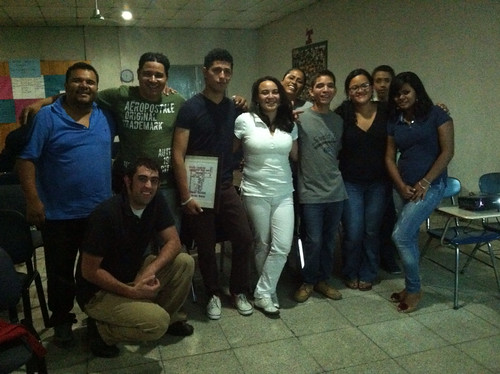
Last night was yet another affirmation that what we are up to together is indeed good and beautiful. My traveling companion and I gathered together, alongside our PCUSA mission-co-worker, in the the upper room of Peña de Horeb. They had their computer and projector set up, pizza, soda, and ice cream on the table, and a video of our partnership through the years titled, "Nuestra Historia," paralleling the theme from our weekend together. We laughed. We smiled. I certainly cried.
And as we broke bread together, I could not help but think of yet another gathering in an upper room when bread was broken and stories were shared about in-breakings of God's dreams and realizations of God's kingdom happening right before their eyes. Shared hopes. Shared dreams. Shared mission.
They didn't know what was ahead. We don't necessarily either. What we do know is this is exactly what we are called to be doing right here, right now, and in the days ahead, too.
We also know it is time to move towards colaborative action.
In Linking Arms, Linking Lives, the authors write of three partnership essentials: deep reconciliation, authentic relationships, and collaborative action. Imbedded within each of these is also a concern for human dignity, equality, and mutual respect. In a word- YES. These have been the foundations of our partnership, especially as we converse together as youth in Honduras and Pennsylvania to develop a shared vision of partnership:
While we wrapped up conversations in that Honduran upper room along the highway, we recognized once again that now is the time for collaborative action. This was the year for shared mission. This summer we will create opportunities to serve even as we continue to learn together.
Water projects?
Tire gardens and sustainable food efforts?
Eco-stove construction?
Repairing homes of youth in the community?
Micro-loans and youth co-operatives?
Participation in workshops and programs with Association for a More Just Society?**
The sky's the limit...
We are not sure what this will look like over the summer or thereafter. What we do know is the mission will be shared and efforts will be collaborative. They will be initiated by youth in Honduras and actualized and sustained together through cross-cultural partnership.
Then we will know this friendship has truly matured, even as the growth continues into something far more beautiful than any of us ever dreamed possible.
"This type of partnership requires hard work, sustained vision, strong commitment, and relentless perseverance in the midst of huge relational and ministry challenges...they also readily testify to the gratifying fruit it produces" (Linking Arms, Linking Lives, p. 111).
Notes:
Top Photo: Celebrating together in the upper room of Peña de Horeb. Love this group of youth leadership!
*The subtitle of this book is, "How Urban-Suburban Partnerships Can Transform Communities." While the collection of authors (Ron Sider, John Perkins, Wayne Ordon, and Albert Tizon) intended this as a domestic resource, the implications are beneficial for international partnerships just as well.
**Be sure to check out Association for a More Just Society. They are in partnership with International Justice Mission and are making significant progress in areas of education reform, security and peace advocacy, youth and family support, and political corruption alleviation. We met with their staffers this week, but there is not enough room on this blog to share of how God is at work here. www.ajs-us.org
Sunday, April 7, 2013
Generación C: Reflections on Youth Workshop in Honduras
"I want to be more than a taker. I want to discover how I can give back, too." These were the words of one of the members of the youth leadership who gathered together this past weekend in Ojojona, Honduras. We, i.e. one of our college youth and I, were invited by the Presbytery of Honduras and PCUSA mission co-worker to aid in the facilitation of conversations, Bible studies, prayer, and play as we explored what it can look like to empower the voices of youth in churches throughout the country.
Here are a few reflections from the weekend:
What's Your Story?
There is great hope and power when we discover we are known and have value. When we are given a chance to share our story, passions, talents, and God-given gifts, we are reminded of our significance in God's dreams for the world. When it comes to youth in Honduras, they are not always given this sort of space and validation. They're expected to fit within particular norms and traditions. Dreams of anything different come as affronts to older leadership fearful of losing [control] of youth in the church.
This may not sound all that unfamiliar. But the ramifications are far greater....or at least different.
It was a joy and privilege to listen to and read their personal stories and passions that they can then use to make a difference in their churches and communities.
What's the Gospel?
This is a question Christians need to ask over and over again. We need to ask not only what we mean when we talk about the good news of Jesus Christ as illustrated in the Scriptures, but also what the good news of Jesus looks like in a particular community, demographic, and cultural context. What is the good news for a teenager in suburban Philadelphia? What does good news mean for youth who live in urban and rural Honduras?
This week we spent significant time reflecting on this very question, related stories in the gospels, and illustrated how theses stories could speak good news into their congregations and communities.
We also explored how the gospel is not only about personal salvation, although that's deeply true, but also an announcement of God's concern for social change and community development. The gospel is an inward and outward journey, for us and the whole world.
For many of the Honduran youth leaders, this was a refreshing reinforcement of the inner longings often silenced by many in leadership. For others, this was a difficult message that they are still pondering in light of the understandings they have inherited generation after generation. Wait, God is concerned about those beyond the walls of my church?
Again, this is not only a challenge for those in Honduras.
What's In a Name?
When I arrived in Tegucigalpa and returned to Peña de Horeb, our primary contact within our youth partnership, I was encouraged to learn they had named their youth group: Generación C.
"The 'c' is for change," said one of their youth leaders.
There is something about a name that gives power, ownership, and a sense that we belong to something worthwhile and influential. This is why, in 2008, we shifted our identity to "Imago Dei Youth Ministry."
That said, at the conclusion of our gathering, each group was invited to share what they would name their group as a means to propel them not only to believe the gospel, but also animate it. How could they put the good news of Jesus into action?
They responded with great enthusiasm, as they considered new identities of affirmation and mission.
I am excited by what has taken place this weekend. I am grateful to be a part of a new way of doing youth mission with long term dreams and aspirations. I am grateful that we have moved away from service blitzes and into real partnership. I am honored we were invited to share leadership this weekend.
I am also grateful that Imago Dei Youth Ministry and the Presbytery of Honduras can together be givers of the good news of Jesus- to one another and to our neighbors near and far.
Dios Te Bendiga
Friday, March 1, 2013
When Helping Hurts: Must Read for All Interested and Engaged in Short-Term Youth and Adult Mission
"I understand partnership. I agree with our definition of partnership. But when are we going to do something?"
In 2010, the Imago Dei Youth ministry embarked on a new adventure and claimed a new paradigm for youth summer and short-term mission: partnership. Instead of purchasing a packaged program that "makes mission easy," often at the expense of the poor, we were called into a more long-term partnership with youth in a developing nation contexts. We were invited by the Presbytery of Honduras and PCUSA World Mission to chart new ground and a more holistic and healthy approach to cross-cultural engagement.
We no longer wanted to assume that we could "bring Jesus" somewhere Jesus was already hard at work. We no longer wanted to assume that we had all the answers that simply needed to be implemented among the poor. We no longer wanted to worship our North American idols of projects and instead chose to enter into meaningful relationships with people who are gifted and called just as much as we are.
We no longer wanted to assume we were helping the poor through week-long service blitzes when in fact we may be hurting them and their human dignity.
In preparation for our initial partnership, and regularly consulted since, our leadership team read, When Helping Hurts: How to Alleviate Poverty without Hurting the Poor and Yourself, by Steve Corbett and Brian Fikkert. They write:
"One of the biggest problems in many poverty alleviation efforts is that their design and implementation exacerbates the poverty of being of the economically rich- their god-complexes- and the poverty of being of the economically poor- their feelings of inferiority and shame. The way that we act toward the economically poor often communicates- albeit unintentionally- that we are superior and they are inferior. In the process we hurt the poor and ourselves" (65).This is particularly the case in naive, yet popular, approaches of suburban youth ministries. We often serve not because we are interested in long-term development and holistic transformation of whole people. Instead, we serve because we have an inner-longing to feel needed, wanted, and as though we have "made a difference." We chase after the rush that comes with quick charity and at the same time does not demand much sacrifice and surrender on our part. We are obsessed with the idea of justice and the possibility of change, but not always willing to endure what is really required for sustainable growth and transformation.
We teach our youth and church members that following and serving Jesus is really about us. We proclaim that discipleship and the way of the kingdom is easy.
"‘Enter through the narrow gate; for the gate is wide and the road is easy that leads to destruction, and there are many who take it. For the gate is narrow and the road is hard that leads to life, and there are few who find it'" (Matthew 7:13).What Corbett and Fikkert remind us is that the desire to help and serve is not enough. We must be willing to contemplate how we can break open our limited understandings of the gospel and revolutionize the task and call of the church and youth ministry service projects and mission trips. We must shed our god-complexes, reject paternalistic tendencies, and explore how to empower those in developing contexts through new paradigms of partnership:
"Development is not done to people or for people but with people. The key dynamic in development is promoting an empowering process in which all people involved- both the 'helpers' and the 'helped'- become more of what God created them to be" (105).This sort of shift in youth ministry service and summer mission is not necessarily popular and may not draw the masses. Youth-to-youth partnerships run the risk of generating more questions from parents and church leaders who are motivated by results. It's hard to measure human dignity, which is often sacrificed for the sake of stories and photos shared with mission and outreach committees.
"We assume that we have all the best ideas about how to do things...the truth is that we often do have knowledge that can help the materially poor. But we must recognize that the materially poor also have unique insights into their own cultural contexts and are facing circumstances that we do not understand very well" (116).
"While poor people mention having a lack of material things, they tend to describe their condition in far more psychological and social terms than our North American audiences. Poor people typically talk in terms of shame, inferiority, powerlessness, humiliation, fear, hopelessness, depression, social isolation, and voicelessness." (53)I am grateful for Corbett and Fikkert's contribution to the missional and community development conversation. I am particularly enamored with their ability to make their wisdom and insights accessible to a broad audience, to include youth and their parents. However, there is a danger. Once you open this book and read it together in the context of a community, there is no going back. You will once and for all crucify old and destructive paradigms of youth mission and service.
You will also resurrect new opportunities to serve alongside neighbors in the developing world with much more lasting and holistic results.
You will live into the kingdom of God together...and for much longer than a week over the summer.
"What are we doing this year?" asked my youth.
I am grateful they have submitted their deposits, some not even from their parents' bank accounts, so they can continue to find out.
"North American Christians are simply not doing enough. We are the richest people ever to walk the face of the earth. Period. Yet, most of us live as though there is nothing terribly wrong in the world" (28).
"Rather than fleeing these urban cesspools, the early church found its niche there...the Christian concept of self-sacrificial love of others, emanating from God's love for them, was a revolutionary concept to the pagan mind, which viewed the extension of mercy as an emotional act to be avoided by rationale people" (44).
"The problem goes well beyond the material dimension, so the solutions must go beyond the material as well." (54)
"Poverty is the result of relationships that do not work, that are not just, that are not for life, that are not harmonious or enjoyable. Poverty is the absence of shalom in all its meanings" (62)
Another great read, with a pending review and blogpost:
Toxic Charity: How Churches and Charities Hurt Those They Help (And How to Reverse It) by Robert D. Lupton