Showing posts with label Racism. Show all posts

Monday, July 12, 2021

Shake It Off? Rejecting Anti-Welcome and Moving Towards Liberation

A sermon delivered on July 4, 2011

"Just shake it off."  I remember hearing these words often as a kid. And it was before Taylor Swift was born...literally. I was an avid baseball player from the time I was four through my freshman year of college. Predominantly a catcher, I was prone to getting hit by a foul ball, wild pitch, or a hitter’s looping backswing. I have many scars and sore joints from those sixteen years.

But where did this phrase come from? Do we believe the movement of "shaking it off" can distribute blood flow and reduce swelling? Does shaking it off ease pain? Or is shaking it off yet another way we teach young people, especially boys, to suppress their emotional responses and just move on without showing that something truly hurts and a wound has been inflicted?
 
Just shake it off. As a little league coach these days, I have committed not to use this phrase with kids, whose bodies and brains and minds and emotions are changing as designed. Suppressing natural and healthy reactions to pain is not my MO on or off the field. Sometimes there are injuries to the body and spirit that cannot simply be shaken off. 

And they shouldn't be. 

God knows, for real, the many traumas endured these last eighteen months, whether the pandemic or the endless social ills, cannot merely be shaken off. The pain experienced is a signal that something is not right and aid and relief is needed. To say shake it off in the American cliched verbiage only buries hurt, leads to neglect, and delays healing. Shaking it off is not equivalent to resilience; it can be damaging denial.
 
So why does Jesus go there? Shake it off, Jesus? Surely the Messiah had more compassion, empathy, and concern for those wounded by others and the oppressive systems of the day. But before we lean in, let's pray.
 
We come to today's text and Jesus gives the disciples a packing list.  How I wish this was all I needed to bring whenever loading up our four children into our minivan and traveling even for a single night at the grandparents. 

Staff. Sandals. Clothes on your back. 

No iPads, device chargers, stuffed animals, or pillows. Not a single suitcase. It is simple, quick, and warrants a dependency on the community care provided by those soon visited.  It prevents being burdened by too much stuff and assumes welcome and having enough at destination. A parent can dream, right? But, is there more to Mark's incorporation of this Messianic and Apostolic packing list than merely the reduction of stuff so the hatchback will close and whoever is riding passenger can actually put their feet on the floor? If you are familiar with Mark, you know that there is always something more.  
 
Mark 6 is right on the heals of two significant stories interwoven together: Jesus' healing of a woman plagued by hemorrhage for 12 years and a 12 year-old girl resurrected from the dead. But this all happened in a neighboring town.  Mark 6 begins in Jesus' village and among Jesus' people of Nazareth. They have known him since he was a boy...and they liked him...until now. Jesus is in the local synagogue, where he grew up and studied under local rabbis, and on the sabbath.  In this sacred space on a sacred day they take offense to his teachingsWe know why, too.  Jesus is breaking sabbath, his disciples are not fasting, he is touching the untouchables, and welcoming the unclean.  Jesus is traveling back and forth across the sea (hold that reference), casting out demons and sending them into swine in Gentile land.  Even more, Jesus has a following of fishermen, tax collectors, and sinners called disciples.  Jesus has spent much of his young life shaking off convention to make room for those often excluded from sacred centers and, ultimately, pushed out of Nazareth as a "prophet without honor" as an echo of Ezekiel 2. So Jesus shakes off their anti-welcome and heads elsewhere to come alongside others shaken off and dishonored by religious and political communities alike.
 
But that is only the beginning. Packing lists. Take nothing with you except your staff.  No bread. No bag. No money. Staff. Sandals. Clothes on your back. Twelve of them, sent out with little to nothing to take with them. Twelve of them with a packing list of immediacy. If you have the eyes to see and ears to hear, you will notice Mark's echo of Exodus.  Remember the mountain? Remember the sea?  Remember the wandering in wilderness before entering strange lands? Remember the 12 tribes? And it began with a newly liberated Hebrew people with a rather short packing list, eating unleavened bread with staff in hand, sandals on their feet, ready to pick up and go at a moments notice as they leave captivity and venture towards freedom, "This is how you shall eat [the Passover lamb]: your loins girded, your sandals on your feet, and your staff in your hand; and you shall eat it hurriedly” (Exodus 12:1). Is Jesus provoking a new exodus?  Is Jesus calling out a new people of God to pursue liberation in a new land, to shake off the manifestations of Egypt and anti-welcome in their time and place?  YES.
 
Jesus calls and sends out his disciples, again an echo of Ezekiel, into the neighborhoods of Israel that had rebelled from God’s story of liberation, to cast out demons and heal the sick not to prove divine status but to send away old lines of exclusion and draw the circle wider...as wide as the infinite love of God.  And if they and their new way of being in the world are not received well among a rebellious people, shake your sandals and leave that place in the same sort of prophetic dust that covered Pharaoh's chariots as they crossed the sea and towards a new life of freedom.
 
Jesus' hometown in dust?  Sacred space, place, and rituals in dust? Tradition and law in dust? Conventional wisdom and all you once believed to be true in dust? If it holds people captive...yes. If it wreaks of Egypt and Pharaoh...yes. The Jesus movement and those who follow the Way, are to be all about exodus. Everything else is dust. And if we pay attention to the parables of Jesus throughout the gospels, they are all about dusting off from Pharaoh's empire in temple and town. It is shaking off the shackles of captivity and anti-welcome.  So, yes, Jesus said, "shake it off," as in be liberated from oppression and rejection and find renewed belonging in the kindom of God, where we hold all things in common and all people called beloved.  
 
Still, what does this all have to say to us in our time and our place? I believe, in essence, it hinges on discipleship. Are we as individuals and communities of faith, even on “sacred” national days of supposed independence, willing to shake off the dust of anti-welcome and long-histories of oppression and move into real and localized expressions of inclusion and concern for the common good?
 
To shake off oppression, injustice, and isolation from community.
To shake off economic systems that perpetuate poverty and homelessness.
To shake off prison systems bent on racial biases and propped up by corporations.
To shake off unclean spirits of violence and the idolatry of weapons and war.
To shake off narratives of acquisition and never having enough.
To shake off white supremacy, homophobia, racism, and the characterizing of Indigenous peoples.
To shake off ableism and ways society excludes people of various physical, social, and mental abilities.
To shake off all that exploits creation and the earth God so loves and calls good.
To shake off myths of achievement that teach our children what matters most is climbing to the top.
To shake off toxic relationships and those bent on bullying behaviors.
To shake off resentment and hatred that only poison our mind, body, spirit, families, and neighborhoods.
To shake off anything that infringes on the foundational truth that each person is a beloved child of God and beautiful reflection of the Divine. To shake off pre-pandemic patterns of existence as individuals and communities that were never healthy and whole.
 
As Octavius Catto, 19th Century African-American martyred civil rights activist, child of a Philly Presbyterian minister, and one of the greatest baseball players of his era, once said as he shook off anti-welcome in his day and pressed for a more just world, “There must come a change which shall force upon this nation that course which providence seems wisely to be directing for the mutual benefit of peoples.”
 
Friends, as disciples of Jesus gathered and scattered, we have been sent by Jesus to liberate and heal in strange places and in unconventional ways. There are sure to be detractors and fair amounts of rejection along the way.  It will be uncomfortable and require dependency on more than your own efforts. So pack lightly and when tempted to quit or return to the privileged norms of Pharaoh's empire, shake it off. Shake it off not as a means to dismiss pain or suppress hurt, but to be released of the power anti-welcome may have over you, your neighbor, and the divine belovedness you both bear, which can never be shaken off. Yes, shake off the dust of this not-love, leave Pharaoh's chariots behind, and move towards a new kind of exodus found in the gospel of justice, peace, and joyful welcome in Spirit-filled community.

O how I love how churches in Greater Philadelphia and beyond have lived into this exodus-laced change and worked to shake of the dust of anti-welcome through collective work and witness: gardens cultivated to provide nutrition alongside neighbors in Chester to shake off food apartheid in that city; collaborations with local networks formed to extend inclusive coffeehouses for youth and adults of various ability levels to shake of the ableism in Delaware County and beyond; kitchens have been flipped into food pantries for those battling hunger and poverty; grants secured to construct tiny homes for those vulnerable to housing insecurity; Clergy have linked arms in protests and marches and committed to courageous conversations on anti-racism in both their communities and congregations and presbyteries; Pride festivals sponsored and hosted in parking lots; after-school programs offered in the midst of a pandemic so children do not fall too far beyond and yet stay safe; faith communities have continued to adapt mediums for worship and fellowship gatherings, leveraging digital platforms and technologies to shake off the isolation so many have felt in the midst of this pandemic. The list goes on as we live into what it means to be a Matthew 25 people.
 
My kids and I recently have found a new love in the music of Jon Batiste, jazz musician who wrote the score for Disney's Soul and the band leader for The Late Show with Stephen Colbert. On his latest album, We Are, Batiste has a song, “Freedom,” appropriate for today's text and the recent national holidays of Juneteenth and July 4th

When I move my body just like this
I don't know why but I feel like freedom (freedom)
I hear a song that takes me back
And I let go with so much freedom (freedom)
Free to live (how I wanna live)
I'm gon' get (what I'm gonna get)
'Cause it's my freedom (freedom)
The reason we get down, is to get back up
If someone's around, go on let them look
You can't stand still
This ain't no drill
More than cheap thrills 
 
Faithful friends, we have endured much as a people these last 18 months. We have also had our eyes and ears opened to so many cries for justice and deliverance from generations of anti-welcome. May we hear Jesus' call to shake off this dust as an invitation to reach back to that ancient song of freedom God's people have been singing throughout the ages and in empires past and present- including this one. This song invites all people to move their bodies, imaginations, and faith communities in such a way that lets go of shackling systems, stories, and old patterns of existence. No, we cannot stand still. This ain't no drill. We cannot stay the same. Discipleship demands we embrace redemptive change and move towards welcome and mutual care. So what needs to be shaken off in your life and in the church for this to happen?  What is weighing you down from hearing of your belovedness or leaning into proclaiming and extending it to others?  Let go and dance ‘cause it’s not only your liberation, but also that of your community and the world God so very much loves.


A Benediction in Poetry
  
shake it off
we tell young ones
send away the pain
subtly
dust yourself off
wipe away the tears
and press on
as an image of strength
as though unharmed
unfazed
by injury or trauma
but what if it hurts
what if the wound cannot be shaken
what if you are not ready to get up
to move on
maybe shaking it off is not resilience
maybe it is damaging denial
suppressing reality
burying emotions
neglecting what makes each of us
human
 
what if
 
yes, what if we do not have to shake off
the pain
but what caused it
to reject anti-welcome
to send away not-love
and linger longer in dreams
for something better
and move towards
in time
our time
a new reality altogether

May we do so in the name of the Creator, Savior, and Sustainer. Amen. 

Wednesday, November 4, 2020

Looking for the Steadfast Love of God: A Post-Election Muse

“I will sing of your steadfast love, 

O LORD, forever…

LORD, where is your steadfast love of old…?”

(Psalm 89:1, 49)

The paradox of the psalmist is where I sit this morning, a lengthy prayer as song, which begins and ends at two very different places. I find assurance that there is a divine love and mercy and kindness that greets us new every morning. The Hebrew word, chesed, has been the hope God’s people have clung to, tight-knuckled, for generations on end. In the midst of their own battles with injustice, oppression, and vile incarnations of power and privilege, they found ways to sing and dance and work towards shalom. And we will, too. God is faithful.
But this morning, the ending of the Psalm 89 has become more like what used to happen when a record skipped or the CD was scratched. The question of absence is stuck on loop. Where is the steadfast love of God to carry us forward?
I am daring to find it in those mental icons of the virtual and socially distant prayer vigils of this past week, where the people of God affirmed we are stronger together than apart- that a better way is possible. I am meditating on the steadfast, loving kindness found in poll workers who volunteered and continue to labor so every vote is counted. I am setting my mind on the faithfulness of God that transcends generations. This prophetic fidelity was embodied by youth at the middle school turned election site, who shared with me that their #BlackLivesMatter swag ran out within the first hour the polls were open. They were still there at 1 o’clock to advocate for their cause. I am finding chesed in the pastors, social workers, community organizers, peacemakers, and all those who refuse to quit until liberty and justice are truly available for all. This was not going to happen, despite our wildest imaginations, on a single calendar day marked for the general election. The four centuries of American --isms will not be undone in one cycle through 24. But, if we lean into the steadfastness of God’s love and justice, which are the foundations of God’s way in the world (89:14), we just may see greater movement towards equity and compassion within our lifetime. At least that is my hope and prayer.
But I still have my questions. And friends, on the other side of a long day and night, be kind to yourselves if you do, too. After all, questions are the most ancient of prayers. We will need them for the marathon ahead.

Sunday, November 1, 2020

Beatitudes Remixed for the Pandemic

Below is an excerpt fro the sermon delivered at Gladwyne Presbyterian Church on All Saints Sunday, November 1, 2020. Full audio soon to be posted here and below. 


I am convinced Jesus' Sermon on the Mount, particularly the first 12 verses of Matthew 5, are to be regular meditations for all those who profess to follow Jesus. The beatitudes, Latin for “blessing,” are the prelude to the Messianic anthem and inclusive roll call of all invited to adventure along this absurd parade route with the ultimate destination a world made new and right again.
 

For those living in a first-century context of occupation by a foreign power, when imperial soldiers patrolled the streets and could force Palestinian Jews into service or do violence to their Brown bodies at a moments notice, with tax systems that perpetuated an unjust economy that favored the rich, and religious institutions were in bed with the empire as they worshipped privilege and preservation over God’s call for justice, peace, and welfare for all who bear the image of their maker- this was very good news


In our own time, with so much grief and loss from the twin pandemics of COVID and racism, with our own corrupt, exploitative, and unchecked power structures and people, when an election is just two days away, when another Black life, this one battling mental illness, has been claimed by law enforcement- this time in West Philly-  we may be longing for these blessings more so than the last time they came around in the lectionary cycle. Because here at Jesus’ rally, instead of rants and rages bent on division and quests for power, Jesus flips the script and draws together the meek and the mourners, activists and justice seekers, those who hunger for a better world, others who organize for peace, and still more those tossed to the side or wrongfully imprisoned by the powers that be. In essence, the beatitudes are Jesus identifying with the struggle of the downtrodden, validating and vindicating the specificity of their struggle, and affirming, as James Cone said, God is the God of the Oppressed. Yes, their lives mattered. This is good news. 


Last May, I pilgrimaged to the Holy Land with a group of pastors and ministry leaders from around the country. One of our stops was actually at the traditional site for this Sermon on the Mount. I’ll never forget the beauty of the landscaped hills, gardens, and chapel that overlooked the Sea of Galilee. As you walked along the floral lined path, there were plaques of each beatitude. In English, of course, which is a sermon for another day…It was breathtaking. I even plucked a flower and have it taped inside the Bible I just read from this morning. But what I most remember is our guide breaking the sacred moment as we made our way out of the garden, telling us Jesus probably never preached where we just were. Then he pointed to the left to the far-less beautiful hillside, across a paved road as cars trafficked, and enclosed with a chain linked fence. “Friends,” he said to us. “This is the more likely location where Jesus spoke the beatitudes.” It was so very ordinary, much less sexy, and on the fringe of the gardens. There were not any flowers to pluck; just rocks and dry dirt surrounded by a rickety fence. This is where, apparently, Jesus took a seated position and embodied a new way in the tradition of Moses, which extended far wider than even the greatest of prophets. In the ordinariness of the day among those often ignored and dismissed as the world trafficked by them, Jesus pronounced blessings and welcome and embrace.  Like a seminarian shared with me in the spring, in the gospel the only thing that Jesus excludes is exclusion. Blessed are…welcome are…included as kin are… Said differently, the beatitudes are Jesus’ great Yes And to those all too familiar with No, But…This Gospel is again the embodiment of Psalm 34, “The LORD is near to the broken hearted and saves the crushed in spirit” (v. 18). 


I wonder, then, should Jesus park himself at the top of Belmont Plateau overlooking Philly, would he remix beatitudes into a rally cry like this:


Yes to you whose spirits are wearied by quarantining and social distancing, whose imaginations have been stretched in this season of virtual everything, and others who have gone to great lengths to facilitate safe community to those who are especially vulnerable and isolated in the midst of the pandemic. Yes, And God’s dreams for the world include you;


Yes to you who grieve, who have lost loved ones to this cruel virus of COVID-19, who covet human connection in this season of increased isolation, whose relationships are strained, others who cry out as another Black or Brown life is slain, for the Walter Wallaces of our city and Breonna Taylors around our nation. Yes, And God’s love, peace, presence, and eternal embrace extends to you;


Yes to you whose voices go unheard, who are cut off at border walls and fences, whose self-worth has crumbled in battles with anxiety and depression, those who are differently abled, and  siblings who identify as gay or trans, queer or any other part of the rainbow community. Yes, And you are made in God’s beautiful image and welcomed members of God’s new world already here and yet-to-come;


Yes to you with a hunger for activism and advocacy, who go beyond cheap words and tirelessly organize for the end of hunger and poverty, homelessness and addiction, racism and all forms of injustice. Yes, And you will find hope and freedom in the good news that God is putting the world to rights;


Yes to you who offer second-chances and forgiveness, even to your worst of enemies. Yes, And you will find freedom as you are unbound from the pain of the past and lean into the mercy of the God of new beginnings and fresh starts;


Yes to you who cannot shake an unsettled spirit when you see another wounded or excluded, for nurses, doctors, therapists, educators, caregivers, and frontline workers whose empathy for others runs so very deep that you find yourself wearied by compassion. Yes, And you have the eyes and ears and heart of God; 


Yes to you who practice peace in an age of violence, embody love in a world thirsty for vengeance, and extend grace in the face of retaliation. Yes, And you have indeed understood what it means to be called God’s witnesses in the world;


Yes to you whose name has been run through the mud, reputation tossed to the wind, arrested for siding with the oppressed, and others dismissed because the way your faith dares to get political and confront systemic and intuitional sins that have stunted human flourishing for far too many. Yes, And your labors are not in vain, rather carry God’s story forward. 


Yes, blessed are all of you whose dreams have been labeled foolish, who have been rejected,, condemned, ignored, stymied or barred opportunity because of your commitment to the way of Jesus, to the point where you may feel like giving up. Yes, And you are not alone and will find joy in the resurrection parade of the Messiah and the movement of the gospel.


Do you dare see these divine affirmations of hope in the rubble of despair?


In this time of the twin pandemics of COVID-19 and increased realities of systemic racism, there are many churches and ministries who have risen up to embody the beatitudes in their time and place, in ordinary spaces at the intersection of God’s love and real human struggle. Recently I spent time with one of our worshipping communities in Philly whose congregants are neighbors experiencing chronic street homelessness. When I showed up to worship, I saw the founding pastor engaged in a conversation with a man about the cross she had around her neck. “You can have mine when the service is over,” she said. Apparently this is common practice for this church without walls. The pastor shared with me that it was a reminder of the blessedness and connection they shared on the streets, a reminder that they were beloved. And anytime someone asks for one of these crosses, they give it away as a remixed beatitude, if you will. It is not uncommon to see people on the parkway wearing these as they recline by the fountains or sit on park benches. 
 
Today is significant for many reasons. Communion Sunday- when the faithful gather and scatter from Christ’s table that is the ultimate beatitude for us and the whole world. Blessed are all of you who come, eat, and remember. Today is also All Saints Sunday, when we remember those who have been the incarnations of these beatitudes before us, who lived into their discipleship in their time and place so we could do the same in ours. They are the cloud of witnesses who nudge us to build upon their discipleship, even to confess, confront, and correct the sins of their day as we move towards the day when all is new and right again. God knows there will be generations who will be asked to do the same after us. But today is also the last day before the last day to vote. Friends, my hope and prayer is that you would find beatitudes swirling around your hearts and minds, imaginations and, yes, your ballot, as you exercise your voice on behalf of those near and far whom Jesus called blessed. Yes, And may you not only cast this vote, but also dare to live into the words of Christ as remixed beatitudes in and for the world God so loves. 

So how might you remix these beatitudes: Blessed are______ for they will________. 

Amen.

Monday, September 21, 2020

Grumbling about the Absurdity of Generosity and Universality of God's Economy

“So the last shall be first and the first shall be last.”

Parables are tricky. These ancient riddles subvert convention and dare us to expand our imaginations for the common good. Parables are sacred mysteries. Parables are playful. Parables are brutally honest about the way things are and the way things can and should be. Parables cut through the binary of either/or and call us into something far more inclusive. Yet we, from ancient days until the present, prefer competition over inclusion, me and mine versus a collective us. So we may not like parables- especially not the one in Sunday’s gospel lectionary from Matthew 20:19.

As I read Jesus’ parable of a landowner who hired workers for his vineyard, I could not think of a more potent passage for our current socio-political entanglement. The hired hands received the same wage, whether they worked a full day or only a small percentage. And those employed first, the Scripture says, “grumbled,” believing they were entitled to more than those who were hired last and worked less.

Here we must pause.

We do not know why some workers were hired first. Did their privilege make them more accessible to employment opportunities? Did they have an “in” with the vineyard owner? Were they born into the trade required to make the deep reds? 

We also do not know the story behind those hired last. Maybe they had a record or physical challenges or had to work covertly so not to be picked up by those who had it out for them for their unpaid debts? Maybe they couldn’t work a full day because they had a large family to care for and little to no help at home. Maybe they were born into circumstance or class whereby they were considered less than those hired first. 

Whatever the reason, the last and the first and those in between were all given a vocation by this landowner and each received the same compensation. All were paid. All were included. All had enough. Still, the first grumbled, forgetting equity did not tilt the scales in the favor of the last at the expense of the first. "Friend, I am doing you no wrong; did you not agree with me for the usual daily wage? Take what belongs to you and go; I choose to give to this last the same as I give to you.” 

Throughout history, social and earthen balance, what Scripture calls shalom, have often been less valued than conquest and winning. We want more than and greater than…We want to be better and best and first- even if we are standing there alone.  Despite the theological beginnings of all persons made in the imago Dei, we subscribe to present social constructs and ideologies that say you win worth and achieve value. I love what artist Anna Strickland writes in regards to her painting below, which is based on this parable:
If we associate the vineyard owner with God, who chooses to pay all workers a daily wage no matter the hours they worked, this parable makes a strong case for a universal living wage. These workers are not seen as hours of labor, but as people. The hours they work may be different, but their needs are the same. And so the vineyard owner pays them, not according to their economic value, but their human worth...God’s grace is not given in measure to our economic value, our hard work, or our humility. It is given equally to all. 
While the pandemic has uncovered, in an abundance of spaces, the beauty of human resilience, compassion, and neighborly love, it has also underscored how tight our grip is on self preservation. This is the very foundation of our American capitalist economy. Mask wearing, which is among the most effective ways to protect neighbor in this pandemic, is protested as a violation of personal freedom.  Black Lives Matter declarations in the midst of rising police brutality against people of color are countered with the fragility of All Lives Matter. (Read: my [white] life matters). Political platforms continue to trumpet a return to an era of perceived greatness and (America) first-ness that exploited far more than protected. We (falsely) assume universal provisions, from healthcare to basic income, means the boots one person is wearing will be unstrapped from their feet and given to someone less deserving. We ignore the complex truth that many do not have access to boots while others have a closet full handed down to them from generations on end. 

We have a lot of work to do as a people in this land that is not our land. In the midst of our modern dystopian saga, one thing is also certain: as long as justice and fairness are polluted by competitive quests for first-ness and greatness, the fullness of God’s dreams for the world will remain elusive at best. It doesn’t have to be this way. There is a better and more inclusive way. This Way flips the script and reverses how we keep score. 

Actually, it doesn’t keep score at all. 

Everyone wins. 

The absurdity of God’s generosity is that there are no losers in the economy of God- only vineyards full of workers with equal share in the goodness to come from the Landowner. May this divine economy shape how we live and move and work AND VOTE in our earthly one.  

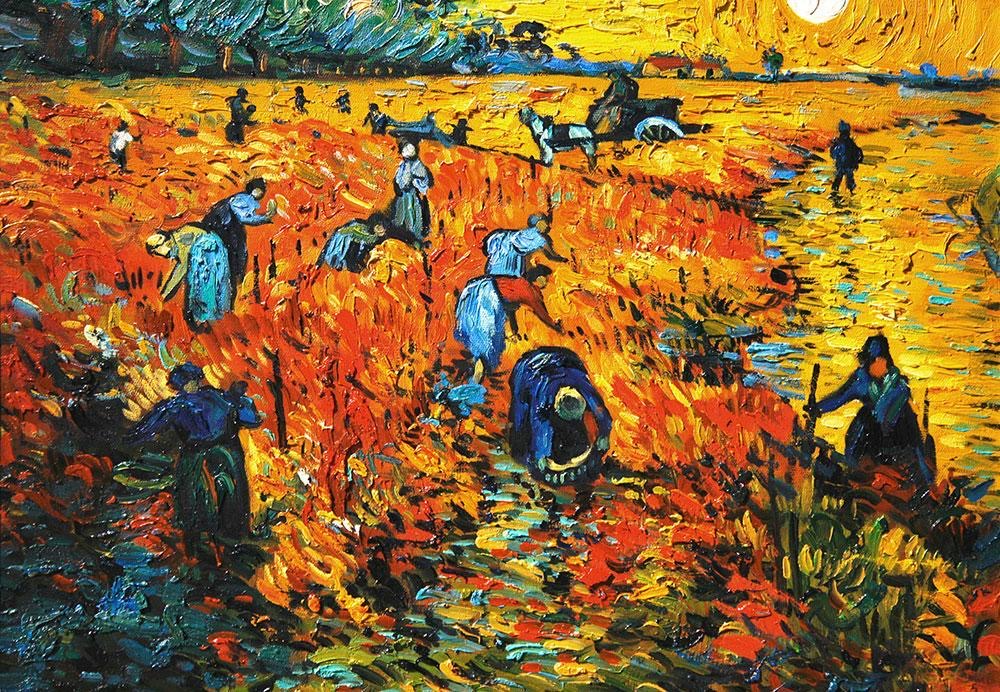
*Header Image, Red Vineyard in Arles by Vincent van Gogh, 1888. 

Saturday, July 4, 2020

Dirges, Dances, and the Good Yoke of Christ: A Sermon on Matthew 11:16-19; 25-30


In April, my kids and I were doing our normal bedtime routine. A mixture of chaos, sibling battles, cries to “stop touching me,” and my occasional rants for them to sit down and listen to the story, we finally got to the not-so contemplative prayer that ends with an invitation for them to pray for something or someone. Sometimes it’s a friend, other times a relative; our youngest son used to regularly pray for seahorses. This particular night, our three-year old daughter, when asked, “I pray for soft things and rainbows.” Friends, I was not sure whether to laugh or cry. Either way, it was perfect. 

These last few months have been particularly hard and heavy, grey and dreary. And we are tired, wearied, and likely at the end of our ropes. Soft things and rainbows may feel like figments of the imagination and innocent, maybe naive, petitions of children in the midst of such pervasive unrest and angst. But maybe there is more than naïveté behind these prayers, maybe they are young offerings of hope in the midst of our laments. Maybe they are even signposts to this morning’s gospel lesson, where Jesus invites us, wearied an worn as we may be, to come to him and find the rest we need for the work ahead.  But before we go any farther, let’s pray. 

If am honest, I have never really liked this Scripture, at least not the end of it, which is where we will begin and then go backwards to the beginning. It’s not really that I do not like the text, more so that I do not like the translations. 

“Come to me all you who are weary and heavy burdened.” 

Sure. I am just fine with that. We get tired. The burdens we all carry are real. Whether the realities of this pandemic of COVID-19 or the pandemic of racism that continues to seemingly lack a vaccination let alone trusted treatments, add this to the daily grind of life in this rat race of the American “dream” that too often looks like a nightmare for far too many, these yokes are heavy. That’s not the issue. My struggle is with the closing lines, “For my yoke is easy and my burden is light.” I have never understood how Jesus could say this in the same gospels where he calls us to carry our cross, give all we have to the poor, forgive enemies, turn the other cheek, put away swords, and work towards the liberation of the imprisoned, hungry, naked, and oppressed. This does not seem like light and easy work. These are certainly not calls framed by soft things and rainbows.

So a few years ago, I dug a little deeper into the text. I wrestled with it a bit and found that there was something to my angst about the typical readings of Matthew 11. A better way to read this would not be “my yoke is easy” rather, “my yoke is good, kind, and benevolent.” The word here is chrēstos, used throughout the New Testament to refer to the same kindness and benevolence of God that we are to show towards one another. It mirrors Micah 6:8, “what does the LORD require? Do justice, love kindness, walk humbly with God.” Still more, this morning’s Psalm 145 and the refrain of the primary characteristic of God throughout the Hebrew Scriptures, “The LORD abounds in loving kindness...The LORD is just in all ways and kind in all doings.” Kindness paralleled to justice and an extension of steadfast love is the focal lens of the biblical story. It is the yoke we learn to shoulder and share alongside one another, which guides us in good and right and true directions. It could even be said that this yoke of loving kindness and benevolence is the mark of discipleship that binds our wellbeing to the wellbeing of our neighbor.

This leads to the first of three questions that came to me this week, why are those Jesus calls to be yoked so very wearied and worn? "Come to me all you who are weary,” is more than the comfort we find with a good cup of coffee on our back patio that leads us to take a filtered Instagram picture to share with others. There is so much more to the fatigue of those Jesus draws to himself to shoulder the good and kind yoke of Christ- christos chrēstos. If we read Jesus’ sermon on the mount and the beatitudes, we gain a glimpse. Those Jesus called were the poor and the grieving, the meek and those hungry and thirsty for justice, the merciful and pure in heart, peacemakers and persecuted those who had surrendered everything for this new life in Christ and kingdom dreams for a better world.  They were the wounded ones with whom Jesus most fully identified and yoked. Friends, the yoke of Jesus is not easy, but it is so very good and kind and leads to a better and more just way of being. 

Over the course of the last few months, our Presbytery leveraged a series on our PresbySpeak Podcast (shameless plug), CyberPsalm Cafe: PresbySpeak for a Time Such as This. These hour-long episodes included conversations with children and youth workers, therapists and financial advisors, activists and advocates, and chaplains who have been on the frontlines of this pandemic and serving as the only human face not on a screen as patients take their last breaths. Recently, in light of the lives lost to police brutality and pervasive racism that particularly threatens Black lives, we hosted a prayer vigil led by African American clergy in our midst and a summit on race that combined both voices of color and white voices. While there is much hope to be claimed as the faithful of all ages and colors march and picket in cities and suburbs, to include Pottstown, the predominant emotion many are feeling- TIRED. Especially for those who identify as Black, weariness is real because they have shouldered this yoke so long, this yoke of injustice mixed with systemic racism in government and church systems. When we live in a land that is not truly our land, where liberty and justice are still not afforded to all, it’s no wonder exhaustion threatens endurance in what poet Julia Esquivel calls, “a marathon of Hope." Come to me all you who are weary and heavy laden- this is the modern context for Jesus’ incarnation of divine empathy that abounds in loving kindness.

This leads to our second question, who are we yoked to in this work of discipleship?  I am no agrarian farmer, but I do know what a yoke looks like. They are often designed for two oxen. Yokes are not for a singular cargo carrier. Do you follow? Jesus’ call to take his yoke upon us is a call to community. I imagine, depending on the size of the load, there would be multiple rows of yoked burden bearers to lighten the load. It calls to mind Jesus’ sending the disciples out two by two. Still, the question remains, who are we yoked to and whose burdens do we bear? I love Jesus’ prayer that prefaces this imagery, “I thank you, Father, Lord of heaven and earth, because you have hidden these things from the wise and the intelligent and have revealed them to infants.” Jesus mirrors the lines he spoke in the beginning of today’s lectionary, “But to what will I compare this generation? It is like children sitting in the marketplaces calling to one another, ‘We played the flute for you, and you did not dance; we wailed for you, and you did not mourn.” 

Dirges and dances and wisdom in this yoked life are revealed to children, the young ones for whom the ancient world cast aside without any status of significance. They were more akin to slaves. Friends, Jesus could not be clearer. If we are to take Christ’s yoke upon us, we are to look to those for whom bondage is their struggle, oppression their past and present history, and marginalization and exclusion the shadow cast upon them. And if this if this is your story- the good news is you are among those Jesus most prefers and calls beloved and wise in his dreams for the world made new. 

A few weeks ago, I ventured into downtown Coatesville, the small sibling city to Philly my family calls home. It was a day when nearly 1000 people took to the main street and march in protest and demand that Black lives matter. A community known for despair, disenfranchisement, and neglect, Coatesville is mostly shown on the news when things go wrong. Generations have come and gone and the narrative remains. But on this day, things were different. Young people were leading dirges and dances, literally, with signs in hand and printed shirts on their bodies. It was one of the most multicultural movements this community had seen- some neighbors compared it to the day Martin Luther King, Jr. visited this region in the 1960’s. I was blown away, especially by the young people, Black, Brown, and White, leading the way. And the community was covenanting to listen to them and others. 

The same held true throughout Greater Philadelphia and all across the nation, as streets were even painted with the messages of the movement. Still more, many who have been hesitant to sign up as allies to this movement previously were now taking to the streets- in the midst of the pandemic. Can you see and hear it? These are the neighbors and beloved bearers of the image of God we are called to be yoked to as disciples of Jesus, the crucified one who drives this loaded cart of truth and reconciliation. What might this yoking to the cause of justice look like for you? What might you need to read? Whose story might you hear? Whose wisdom do you need to finally acknowledge and inform your decisions? What privilege might you need to acknowledge? What cause might you financially support? How might you reframe your leadership structure? How will you vote? This is not easy work, but it is so very good and just and reflective of the loving kindness of God that shapes our discipleship. It is also a good word for us on this Independence Day weekend, as we remember our freedom came at a cost and many still do not know the fullness of this freedom. 

Which leads to the final question, “are you willing to shoulder the yoke of discipleship no matter the cost?” The discerning of dirges and dances, justice and peace, truth and dismantling of oppression is everything but soft things and rainbows. It will likely lead to tension and strife, strained relationships and difficult conversations. You may lose jobs and dollars, reputation and a fair amount of privilege, membership may decline, and donors may detract. But inaction is the greatest of privilege and the vilest opponent to the gospel. I think Jesus’ cousin, John the Baptist, knew this and is likely why he is given a shout out at the center of today’s gospel. Jesus and John both knew well what it meant to be misunderstood and slandered for those they chose to be yoked to and burdens they carried upon their backs. This work of loving kindness and benevolence ultimately cost them both their lives. Their vocation went beyond cliché and trendy slacktivism. Will ours, too, in this time and place? 

I love the words of Womanist theologian, ethicist, and activist, Emilie Townes, regarding this text, “In this ripening and ripening once again we discover God’s wholeness as we seek to integrate our faith into our daily lives. This transformative discipleship is hard, necessary, and sometimes very lonely work…In doing so, we are called to live out our possibilities and not our shortcomings by answering, ‘Yes!’ to God’s ‘What if?’ As we do so, the love of God revealed in Jesus’ witness moves us to grow in compassion, understanding, and acceptance of each other.” (Emilie M. Townes, FOTW 214)

In other words, the yoked life of discipleship will lead us to dirges and dances and back again, as we say yes to God’s “what ifs”? What if we yoked ourselves to the cause of dismantling white supremacy that continues to plague our communities as much as any virus? What if we yoked ourselves to the provision of quality education for all people in this country and as far away as India? What if we yoked ourselves to the dreams of safety and opportunity for the immigrant in our land?  What if we yoked ourselves to the elimination of medical debt and assurance that all could have healthcare not only during COVID-19? What if we yoked ourselves to caring for the environment so the air was clean everyday as it has been in the midst of this pandemic? What if we yoked ourselves to the petitions of indigenous peoples, on whose land we live? What if we yoked ourselves to the wisdom of people of color, LGBTQIA+ peoples, and children and youth who dream of a world where justice runs down like a mighty river? What if we yoked ourselves to all this and more as an extension of our discipleship? What if we worked, as 19th Century abolitionist, William Lloyd Garrison wrote in the preface to Frederick Douglass’ autobiography, “to be faithful, be vigilant, be untiring in your efforts to break every yoke and let the oppressed go free?”

We would be wearied without a doubt. But we would be wearied and worn because we are bound with those who have been broken and brutalized by the systems of our day. We would be wounded because we have shouldered ours and our neighbor’s oppression for generations and finally said, “enough!" This is what it looks like to live into the compassion and steadfast loving kindness of Christ who beckons all to come and find the rest each of us and all other bearers of the divine image need. This is the yoke of discipleship that leads us in dirges and dances of lament and hope, and the liminal spaces between, until all is well and good and right again. So may you, in all your weariness and with heavy burdens, come and follow the crucified and resurrected one, whose yoke is good and kind and burden just and right. May you follow this Jesus who offers more than soft things and rainbows, but assurance that the way of this gospel will ultimately lead to the kind of everlasting rest and freedom our souls and the whole creation most craves. Amen.

Tuesday, June 9, 2020

Thinking about Racism, Privilege, and Johnny Come Latelys

Every day, between 5-7 p.m. at the intersection of First Avenue and Business 30 in Coatesville, a small group of protesters stand with signs calling for change, solidarity, and affirmations that #blacklivesmatter. On a five-mile run this weekend, I passed by this particular placard and a group of about six. Despite their gracious invitation to join them, I could not stay; our family was quarantined until the test results came yesterday and confirmed we were and are COVID FREE. So, I supported their presence by remaining distant. 

The recent protests, marches, and public demonstrations are making some serious and rapid head way these days. I cannot help but think the Spirit is hovering over the chaos and bringing goodness and shalom out of the formless voids of the present struggle. I am not sure if the pandemic has forced many people of privilege finally to confront their complicity in systemic racism, but people are coming out in droves to affirm #blacklivesmatter and to call for far more than mere police reform. They are- we are- looking for much more. [Check out this article on what #defundthepolice and #abolishthepolice really means

For many, this was a weekend of increased allyship. For some, it was the first step in their commitment to the work of anti-racism. Maybe they were buying into the latest social trend and a chance for a quick IG pic, but their presence echoed the mantras and affected positively the algorithms calling for justice.* Sure, there is a concern for what can be called "performative activism," and skepticism has just cause, missing the forrest for the trees may not be helpful either. So  whenever I have been tempted to question fellow people of privilege who are “Johnny Come Lately,” I cannot help but also hear Jesus’ response to his disciples' cynicism about outsiders joining their exorcisms, "Whoever is not against us is for us" (Mark 9:40). 

Under quarantine, I thought a lot about and watched virtually the steady streams and images from protests and marches from large cities to small towns. My heart, mind, and conscience were deeply moved.  Then I ran by and briefly engaged the few at the corner. They have been there before and will be after the weekend buzz. They recognize this is more than a moment but a movement. They know that systemic racism is a problem and epidemic in America the brutiful. Period. Full stop. 

The generational manifestations of structural biases and racial injustices will not be deconstructed in a single weekend or by any isolated social media post, certainly to include this one. The dismantling of America’s original sin of racism that pervades law enforcement and politics, corporations and religious institutions, quality of education and access to nutritional food, basic healthcare, sustainable employment, affordable housing, green spaces, and recreational facilities, etc. will take all of us for much longer than a day or two. 

But these days matter so much, still. They matter as much as the Black and Brown lives that are the focus and leaders of this movement. 


So join the cause in whatever way you can, large or small, aware our collective efforts are required this day and every day, on this street corner and in every community near and far.  

Thursday, June 4, 2020

Recommended Reads on Race, Bias, and White Privilege: A Continual Conversion


There are many great links to recommended reads as we continue to confront the horrific realities of racism that, as many have said, is this country’s original sin. In efforts for people of privilege to educate ourselves, we must remember the systems, structures, and powers of our day are not necessarily broken; rather, they are working precisely as designed in a nation with a history of enslavement, genocide, conquest of native peoples, and racism that targets people of color. Hauntingly, these are the primary backdrops of our social, economic, political, and even religious establishments and ideologies. The great evil is, despite endless pleas, protests, marches, movements, and orations by some of history's greatest activists and leaders, these very systems have not been deconstructed or reformed to eradicate systemic racism. Instead, they continue to be cowardly sustained and defended. 

To be clear, the road towards such understanding has been slow and difficult, at times painful and humiliating. I have had to confront my own racism, biases, and privileges for the last twenty years and more. Most of my pilgrimage of faith and discipleship formation has come by way of confession and unlearning much of what I considered true, good, right, and “normal.” For white people on this journey, there is no such thing as an arrival as “not racist;” there is only the continual conversion of the heart, mind, and lenses through which we view the world and our movement through it. I am beyond grateful for the patient saints and cloud of witnesses who have walked alongside me, extended grace to me, and continue to aid in my own journey to be the best kind of ally and co-conspirer for God’s justice and reconciliation. There is much work to do and the place we all need to start, especially for us white folk, is by taking a long look in the mirror. 

Or our book shelves. 

So here are some recommended reads and a few podcasts, too. I have not been to my office for some time, so going a bit off memory here. There are an infinite others, and would love recommendations. Talk to one another and do the honest work together. 


*Picture above is a collection of old books turned into the base of the bar at the Modern Times Lomaland Fermatorium. 

Friday, May 29, 2020

On Pentecost Today


They were all gathered together
in one place
this was not hegemony
this was resistance 
through solidarity 
deconstruction of homogeneity 
those with narratives of exclusion
finally finding inclusion 
proclamations that their lives
languages
cultures
quests for justice 
yes, they mattered
in this story of resurrection
that hinged on the vindication of the 
Oppressed One
not slowed by the abuse of his brown body 
untethered to death by 
beastly powers and systems 
who ushered in a movement 
the Ascension of a new kind of community
which we await for still
in our time 
in our place
when these visions and dreams 

feel so very distant.  

---
Art by Mayah, age 3.