Showing posts with label Palm Sunday. Show all posts

Sunday, March 28, 2021

Paint Brushes of Protest: Palm Sunday as Cultivated Resistance


One of my favorite prints in my office is by a Palestinian artist, Suleiman Mansour. And the Convoy Keeps Going was included in a now-sold-out set of postcards I purchased at the Walled Off Hotel in Bethlehem. Often presumed to be a Banksy work, which speaks to the erasure of Palestinians by Western collectors, this small replica of a larger mural conveys much of the struggle of those who live in the midst of on-going apartheid in the Holy Land.

Banksy has always been one of my favorite artists. Mostly because of his mystery and subversion of...everything. Yet, when we made our surprise stop to the mysterious graffiti activist's museum devoted to the Palestinian struggle for liberation, I shrugged off purchasing his pieces because I was drawn to Mansour's. The paraders carry a gun loaded with a palm branch, paint brushes instead of swords, and a key wielded for opening whatever locked door awaits the end of their route of resistance. As they make their convoy in the midst of tourists on the sandy beach, much is conveyed about one of the oldest of human struggles for dignity, validity, and freedom.

And I could not help but think of Palm Sunday and the parading of another Palestinian in the midst of crowds carrying branches of resistance, longing for liberation in the midst of another empire of ignorance and oppression. Much like this print with a confused origin, this narrative is often erased of the pervasive power in the protest. Despite each of the four Gospels' inclusion of the events and contextualizing prophetic and subversive first-century imagery, the story has been white-washed. 

Palm Sunday is a profound quest for justice and jubilee not by way of empire, but through a freedom ride on the back of an inexperienced, rookie ass in solidarity with those most marginalized, exploited, dismissed, and ignored. Palm Sunday is a convoy of courage to elevate the voices and narratives of those long silenced by the dominant culture. Palm Sunday is when the the oppressed are empowered to cry out for salvation, "Hosanna!", and find it not in a war horse but a Palestinian Messiah on the back of a pack animal- carrying the burdens of long-suffering people. And the weapons of this movement look less like those of a violent army and more like imaginative artists and activists who carry branches of life, brushes of color, and keys that unlock new openings through systemic injustice that have excluded and shut out too many for far too long.

What does this mean for us, in our time and place?

In the midst of a lingering pandemic? In the wake of back-to-back mass shootings, which continue to expose our unmitigated idolatry of gun violence mixed with racism and the objectification of Asian American, Asian, and Pacific Island siblings? In the on-going struggle of Black and Brown neighbors? In the erasure of Native persons throughout this land that is not our land? When, despite the mounting deaths, the church continues to prioritize the preference of those in the pews over those who protest in the streets, naive to the truth that this is why they take to the streets versus speak from the pews in the first place?
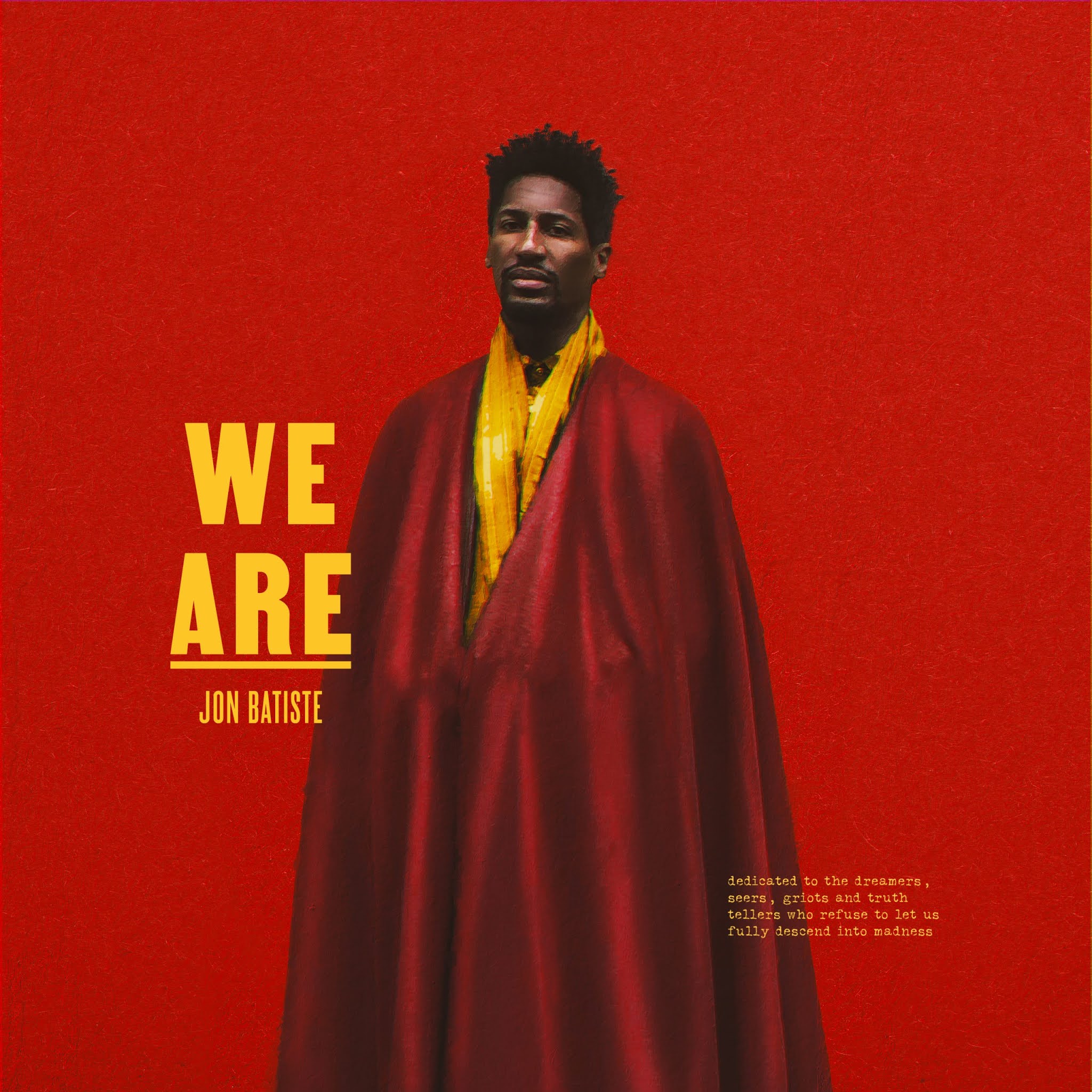
I know I have found so much wisdom these days in the poets and painters, dreamers and placard carriers, photographers and film makers of our generation. They, like those in Jerusalem that day, have been led the way and called out, devoting their efforts to the "dreamers, seers, griots and truth tellers who refuse to let us fully descend into the madness" (Jon Batiste, We Are album cover art dedication).

I keep Mansour's print in my office as a regular reminder and charge to self to devote my vocation to the same. I keep it there to stir confessional questions: In my work and witness, where am I in the painting? Am I among the convoy or seated with toes buried in the sand as the struggle passes me by? Do I parade alongside those whose hosanna cries echo two millennia later or remain unconcerned about the struggle that has cast shade on my privilege?

The answers are not as clean as I would like; my life is endlessly reformed and reforming. Jesus, hosanna! Save me. Save us. Save all. Ride on through our places of suffering and silence and carry our cries for something better and far more beautiful than what we presently know. And may your grace cover a multitude of our individual and corporate sins. 

Sunday, April 5, 2020

Cries of Hosanna and Palm Branches Grasped White-Knuckled


This originally was written for the Presbytery of Philadelphia (here) and adapted as a sermon preached at Carmel Presbyterian available here. 

Save us.  Help us. Rescue and deliver us. Hosanna. These are more than empty words. They are situated. As Jesus paraded upon a donkey through the cloak-covered streets of Jerusalem and beneath branches of palms gripped white-knuckled by a desperate people, they were living in the midst of Roman occupation. They were likely anxious and afraid, angry and uncertain, tired and yet mustering up whatever hope they could find. This Palm Sunday, the ancient words have their own push and pull that needs no published commentary or seminary training to nuance. We all feel it. The cries of those who prepared that Messianic parade meet us with a layer of empathy that serves us better than any introduction we could borrow from one of those preaching books on our shelf or pastor blogs on the internet. Their shouts remind us the salvation of the biblical story is not only about some eternal hope, but also a plea for God to act with immediacy- “on earth as it is in heaven.” These desperate petitions of ages past can even be paraphrased for our own strange time and place. You likely have spoken them as your own prayers lately, laced with trust and grief, faith and doubt, surrender and anger, too. 

Save us from the shelter-in-place that has made it so kids in contexts of poverty no longer have access to daily nutrition and others forced to stay in homes of violence, addiction, and abuse. 

Save us from financial insecurity, unemployment, and the fear that when this ends we will not have a job waiting for us.  

Save us from having to teach our children math or science or the viola at the same time we attempt to maintain an eight-hour workday. 

Save us from the over-indulgence in digital gatherings and the fear of missing out on community if we do not participate in that ZOOM call.

Save us from this virus that is resulting in far too many deaths and the negligence of the powers that be, who prioritize economic systems, graphs, and data over real human lives. 

Save us from the racism that has falsely pinned this pandemic on a particular people. 

Save us from exhausting our hospitals and under-resourcing medical professionals. 

Save us from what we have done to the earth and the temptation to return to old habits when this passes. 

Save us from prioritizing the things of worship over and above the simplicity of being together in the midst of real human suffering and isolation. 

Save us from thinking Easter can only happen when the sanctuary is full of lilies, the pulpit adorned with white paraments, and the pews full of people in their finest clothes. 

Save us. Rescue us. Deliver us. This has become my daily meditation. There are days where the Lenten journey feels all-too real and the silence of God is quite loud. You likely know exactly what I mean. Those first century parade goers did too. Then there are days it feels as though God hears my prayer. This shows up through the colorful meditations of my children, worship services hosted on-line, and pastoral care extended to shut-ins digitally. God’s presence is revealed through communion officiated virtually, youth groups gathered over ZOOM, and congregations organized to make masks for doctors and nurses. We see the Spirit at work in denominational agencies committed to offer financial assistance and debt relief, creation momentarily relieved from pollution from heavy traffic patterns, and ministries within our bounds determined to ensure their neighbors battling food insecurity continue to receive daily bread. The list goes on, reminding us that this is not the end and salvation continues to ride in through unconventional methods.

A section of a poem by Guatemalan poet, Julia Esquivel, has been a part of my email signature for a while and proven especially pertinent in these days. She wrote this lyric, entitled “Hope,” while exiled from her war-torn homeland in the early 1980’s. 
In the most obscure and sordid place, in the most hostile and harshest,in the most corruptand nauseating places,there You do your work.
So this Sunday, we grasp our palms tightly and white-knuckled in solidarity with all those past and present who have longed for liberation from all kinds of nauseating and hostile realities. We wave the branches, likely digitally, knowing others around the globe are doing just the same and have for generations. These palms become our human connection in the midst of the physical distance. These palms are our symbols of hope in the midst of despair as we hold in contradiction the promise of resurrection that only comes after the darkness of crucifixion. The palms subvert the suffering, even if just for a moment, as we celebrate our help is coming- has come- upon the back of an unconventional pack animal. 

The question for us is: Will we entrust God with our lives as we move into the uncertainty of both Holy Week and every week of this new reality? Still more, will we participate in God’s deliverance as we embrace unconventional measures to parade love, empathy, community, compassion, and care for neighbor- even by way of the wisdom to stay put and remain physically distant? These are not questions I pose to you alone. These are questions I ask and prayers I lift daily, this week with a palm branch white knuckled, too. 

Save us. Rescue us. Deliver Us. May we allow these cries of the masses then and now to linger a little longer this Holy Week as we look for salvation to come once more. 

Audio of Sermon preached at Carmel Presbyterian available here.


#LilyLectio Divina for Palm Sunday