Showing posts with label Modern Psalms. Show all posts

Monday, April 5, 2021

First and Last: Easter Grief and Looking for Love Liberated

He wasn’t as fast as the other disciple 
whose feet left clouds of dust behind 
both robes hiked up
breaking convention 
as they hurried to the place
Mary said was empty
The first disciple was driven
the beloved one
determined to see for himself 
before all others 
the weight of despair
could hold him back no longer 
or was it rage 
hell bent to find out who -
who would dare
to thief the tomb 
where their murdered Teacher
rest after the suffering 
this disciple arrived first
and it was as she said
empty
yet a new layer of grief,
or was it an inkling of hope
that just maybe death was not the end,
as the first became last
now froze in time
unable or unwilling
to enter death’s door
and confront the unknown
But the other disciple followed 
not far behind 
catching his breath
perplexed as to why the other
stood still 
outside the question 
as this one refused to quit the quest
and dared go in 
to find the wrappings of death
unraveled 
Then they remembered 
the first joined the last
inside 
not alone this time
which may have been the hesitation all along 
not wanting to be first
which is not the goal
but entrance into life
found only in togetherness
that enables us 
to finally see
and return home 
But Mary stood outside weeping 
have we forgotten her
who was first
and also last 
at the tomb empty 
whose Easter grief is our own
struggling to be in solidarity with joy resurrected
wanting to believe 
to finally see
something better than 
the emptiness of the now
as we wait for our name 
to be spoken 
and our eyes opened 
to what we longed to be true
our humanity vindicated 
Love liberated
calling us up and out
among the first and last

(based on John 20:1-18)

Wednesday, September 16, 2020

Meaning in the Mundane: A Poem


life can be vain mystery if we allow it do not seek and find joy and justice meaning made even in the mundane
cultivating
curating
just enough in deserted places


*Picture from Boulder Fields at Hickory Run State Park, Pennsylvania. Poem written after reading Ecclesiastes, the best of sacred cynics. 


Sunday, March 29, 2020

Empathy before Resurrection: When Tears Need to Come First


This morning’s gospel story hinges on the raising of Lazarus, one of Jesus’ closest friends. The story is laced in emotions and may be one of those places where we see Jesus most vulnerable. He learns of Lazarus’ death and “he began to weep.”

If I am honest, that’s where I am most days right now. Sure, I trust we will be delivered from this mess. I am hopeful the financially broken, food insecure, and homeless will find their provision and shelter. I dare to believe doctors and scientists will discover our way out of this, to cure the sick and unbind humanity from this pandemic. Yes, the stench of this quarantine will pass (and, let’s be real, we do not shower as often these days, so the stench is ripening by the hour). 

But for now, I find more comfort in the empathetic tears of Christ than in the miracle of Lazarus’ resurrection. That’s because we are still in the thick of the unknown where promises of resurrection may feel empty at best and naive at worst. And Jesus knows this. So before he speaks or acts too quickly, he empathizes and weeps with his friends. Only then, likely, can these same friends trust Jesus to raise their dead brother and participate in his unbinding. 

But first he cries sacred tears. May these tears of an empathetic God meet you with holy comfort in these days. 
-------
When the shelter in place, quarantine began in our household, Lily and I started morning #LilyLectioDivina. We pull out the lectionary Psalm and Sunday gospel and the font of her fingers illustrate the words of Scripture. Here's the running playlist :)


Tuesday, October 29, 2019

being and living


"the man became a living being." (Genesis 2:7)

being
without
living
is not
being
to be
human
is to
live
and
be
awakened
infused
by
divine breath
a body
becoming
holy
made for
the sacred
art of
cultivating
co-creating
life
through our
being
whole
and
living
beyond
merely existing 


[photo taken en route back from State College; the descent down 322 with the fall mountains on both sides is one of my favorite roads to travel)

Tuesday, April 23, 2019

Easter and the Kaleidoscope of Struggle


When I was a kid I remember wishing particular holidays would last longer than the allotted 24 hours. I wanted to linger longer in the celebrations...and the candy...and the time off from school.

As an adult, I feel the same- although a little less candy and I am ok with the kids going back to school.

This is where I am grateful for the regular liturgical reminder that the high holy days are actually seasons. They extend beyond a singular calendar square and hold us for a prolonged period of time; they usher us into another time. Easter is no different. Resurrection is more than what happened; resurrection is happening. Easter is more than an isolated moment; Easter is the momentum that propels us forward and towards the Ascension and Pentecost.

And in these days, when every morning we brace ourselves for the latest news story to break about signs of death or terror or violence or churches and mosques and synagogues burned or bombed, we need the story of the empty tomb to be read on loop. As poet Julia Esquivel writes, in our internal and external "cyclone of a kaleidoscope of struggle" we need "to live threatened with resurrection."

This Lent, I covenanted to my own practice of mindfulness as meditation. As a part of that journey, I carried sacred phrases shaped by lectionary stories that could hold the space for me as I ventured towards and through Holy Week.  The labyrinth of characters became my own kaleidoscope of struggle. The discipline made the final inscription in the center, Christ Is Risen, all the more meaningful and, dare I say, holy. The resurrection did not just show up ex nihilo; rather, anastasia was welcomed in anticipation.

Now, as I lean into the Easter season, the pilgrimage continues. Each day, I venture around the narrative created. I linger a bit longer and hold on hope tighter, assured death has not the last word. I commit to read through this before I unlock my phone and encounter the daily newsfeed. Only then will I, and all of us, be able to weather the cyclone of the day and threaten it with resurrection.
----
Lenten Labyrinth towards Holy Week and Easter

From the dust of goodness you came, to the goodness of dust you return. / The way things are will not always be. / Lament, but do not longer; look for hope on the horizon. / Repent, turn towards what cultivates life. / What was lost will be found; what was dead will be raised to life. / Surrender cynicism and isolated self-interest; breathe in the fragrance of hope in the extravagance of love. / Wave hopes and dreams of deliverance; welcome liberation. / One day at a time; one story at a time; let hope come in time. / love one another. / Look upon the cross. / Watch and pray. / CHRIST IS RISEN! 

Thursday, February 15, 2018

The Earth Is Not a Cold Dead Place: Modern Psalms for Lent 2018

Each year I develop a soundtrack for Lent titled, Modern Psalms for the Lenten Journey.  Usually they are weekly songs from varied contemporary artists, which I post here and pair with a biblical text. This year, I may only need a single album. 

“The Earth Is Not a Cold Dead Place,” by Explosions in the Sky.*


Purely an instrumental album, each piece moves between haunting and hopeful, mysterious and soul stirring. Even the track titles bear a sacred significance, seemingly liturgical in label. 

And the best part, there are no words. Because the condition of the world in the twenty-first century is in need of something more than lyrics and nuanced rhetoric. Words serve a place, especially when put to paper in efforts to organize communities, draft legislation, lobby for signatures, cry out in prayer, and call neighbors near and far to action on behalf of our most vulnerable neighbors. But our words are not enough, we need another kind of rhythm to move our souls and bodies, to link arms for causes that demand safety in our schools, enhanced legislation related to the reduction of access to firearms, fair economics, disrupted pipelines to prison, dismantled systems and institutions fueled by racism, universal provision of healthcare, gender equality, hospitality extended to immigrants and refugees, the end of sexual assault and harassment- especially in the workplace, and the stymying of wars started and sustained to pad the pockets of the 1%. 

The list could go on and on related to aspirations for social jubilee…but that’s where I put on this album to center my spirit and imagination, to draw me into the Lenten story for the next 40 days. It forces me to move beyond the limits of language and towards something and Someone completely Other. Still more, I am reminded that amidst all that is wrong with the world- and there is so much that is so very wrong- this planet is still that which God so loves. So it cannot be purely a cold, dead place. There is beauty to be found if we have the eyes to see and the ears to ear. And this beauty just may be the Spirit’s nudging us to press on in our work and witness as those called out of dust and towards resurrection hope. 

Paralleled Biblical Text for this Album: Genesis 1 (The Full Creation Story)

*I first discovered this album as a part of Rob Bell’s interview of a former seminary classmate of mine, Caleb Wilde, who wrote a book, Confessions of a Funeral Director. A collection of anecdotes that explores the sacred amidst death and dying, this book also makes for a great Lenten read. The podcast is fantastic, too. 

Wednesday, October 12, 2016

On Psalm 66 and Contentment of Creation: A Lyric for Seasons of Angst and Uncertainty


“All the earth worships you; they sing praises to you, sing praises to your name.” (Psalm 66:4)*

Non-anxious
without fear
worry nowhere present
only worship in the air
creation not naive
the earth fully aware
still content, unwavered
assured of God’s tender care 
listen to the birds
consider lilies in the fields
amidst chaos and confusion
not phased by despair
each tree a proverb
landscapes as parables
wisdom in their spoken words
if we listen, they are there
fear not
fret not
sing
God is here
everywhere.


*This was the lectionary Psalm for the 28th Sunday in Ordinary Time, Proper 23 of Year C. Photo taken at the Colombia River Gorge in Portland, OR after the 222nd General Assembly. 

Thursday, August 18, 2016

Threatened with Resurrection: Julia Esquivel’s Prophetic Poetry Much Needed for Today

Every now and then you stumble on something and someone you know others have read, but wonder what took you so long to encounter for the first time. Last night was one such night.

As I read Julia Esquivel’s poem, They Have Threatened Us with Resurrection,” I could not help see her lyric as pertinent for our time and various places 36 years later. In light of the endless streams of stories of despair and senseless violence (as if there was any other kind) near and far, the Guatemalan poet and theologian offers us a reminder that the greatest threat to our despair and the powers that be is the hope of the resurrection and the inability for death to ever have the last word. This was something Esquivel knew first hand, as the activist, poet, and minister was on the frontline of justice movements in the midst of political unrest and genocide in her beloved Guatemala in the middle portion of the twentieth century. Esquivel would ultimately be forced to flee her country in 1980 and find exile in, among other places, Mexico, Nicaragua, and a monastic community in Switzerland. Read more about this radical and revolutionary saint here.  

Rather than butcher the beauty of the poetry through paraphrase and preface, read a portion of it below or the full text here. The poem comes from Julia Esquivel’s larger collection, Threatened with Resurrection; Prayers and Poems from an Exiled GuatemalanAnn Woehrle, trans. (Elgin, Illinois: Brethren Press, 1994). As many preachers and teachers have already discovered, I am sure there will be need to revisit this piece come Easter. 

"They Have Threatened Us with Resurrection" (an excerpt)


It is something within us that doesn't let us sleep,
that doesn't let us rest,
that won't stop pounding
deep inside,
it is the silent, warm weeping
of Indian women without their husbands,
it is the sad gaze of the children
fixed somewhere beyond memory,
precious in our eyes
which during sleep,
though closed, keep watch,
systole,
diastole,
awake.

Now six have left us,
and nine in Rabinal,
and two, plus two, plus two,
and ten, a hundred, a thousand,
a whole army
witness to our pain,
our fear,
our courage,
our hope!

What keeps us from sleeping
is that they have threatened us with Resurrection!
Because every evening
though weary of killings,
an endless inventory since 1954,
yet we go on loving life
and do not accept their death!

They have threatened us with Resurrection
Because we have felt their inert bodies,
and their souls penetrated ours
doubly fortified,
because in this marathon of Hope,
there are always others to relieve us
who carry the strength
to reach the finish line
which lies beyond death.

They have threatened us with Resurrection
because they will not be able to take away from us
their bodies,
their souls,
their strength,
their spirit,
nor even their death
and least of all their life.

Because they live
today, tomorrow, and always
in the streets baptized with their blood,
in the air that absorbed their cry,
in the jungle that hid their shadows,
in the river that gathered up their laughter,
in the ocean that holds their secrets,
in the craters of the volcanoes,
Pyramids of the New Day,
which swallowed up their ashes.

They have threatened us with Resurrection
because they are more alive than ever before,
because they transform our agonies
and fertilize our struggle,
because they pick us up when we fall,
because they loom like giants
before the crazed gorillas' fear…

...Join us in this vigil
and you will know what it is to dream!
Then you will know how marvelous it is
to live threatened with Resurrection!
To dream awake,
to keep watch asleep,
to live while dying,
and to know ourselves already
resurrected!

Sunday, July 31, 2016

Moving Beyond Absurdity & Vanity: A Sermon on Ecclesiastes 1:1-18 & Luke 12:22-31

Sermon Delivered at Central Presbyterian Church in Downingtown, PA (AUDIO HERE)

The lectionary text for this 11th Sunday after Pentecost, Ecclesiastes 1:1-18, is nothing short of a downer. Written by a royal sage, wisdom teacher and preacher, known in Hebrew as the Qoheleth, he delivers a dreary summation of the world as he saw it.  Many attribute the text to King Solomon and suggest Ecclesiastes, meaning “one who leads a congregation,” as the more cynical antithesis of the Qoheleth’s other writing, Song of Songs, likely written in his more youthful days. Song of Songs is a beautiful, hopeful, and a bit racy love affair often considered an allegorical portrayal of God’s love for God’s people.  Song of Songs was often kept away from Jewish teenagers due to its explicit imagery. For the same reason, Song of Songs is often a favorite for teenagers in church youth groups.

But Ecclesiastes is not that- at least not the beginning.  The opening words sound much more like Philly sports fans after generations of disappointment. 

Vanity. Meaningless. 

For me, the words also remind me of our attempts to get all three of our kids to bed before ten o’clock. 

The Hebrew word is tough to define in English, some settling for vaporous, delusional, or absurd, because despite all the toil for wisdom and righteousness this remains the dominant reality surrounding him. As you venture further into Ecclesiastes, the Qoheleth pens examples like these, sure to speak to our congregations today, 
“Again I saw the all the oppressions that are practiced under the sun.  Look, the tears of the oppressed- with no one to comfort them!  On the side of their oppressors, there was power- with no one to comfort them. And I thought the dead, who have already died, more fortunate than the living, who are still alive; but better than both is the one who has not yet been, and has not seen the evil deeds that are done under the sun” (4:1-3).
If I ended this sermon there, I wonder the response? Would you still rush to the donuts and coffee after the benediction? I know my kids and likely the teenagers of this church would. Some of the youth may read Song of Songs while they eat- but that’s another conversation. 

The raw and honest poetry of Ecclesiastes is pertinent for the days and times in which we presently live.  Dare I say Ecclesiastes speaks what all of us are likely thinking in these days, whereby the election season leaves many or most of us despairing as though all we have before us is vain absurdity, all things are wearisome, a mere chasing after the wind. As each candidate paints a picture of their version of reality in efforts to leverage their agenda as that which can deliver, redeem, move forward or make great again, we become tempted either to be paralyzed by fear or enamored by lofty political promises. 

Still more, in the midst of increased terrorism, all-too-frequent killings of black lives by those sworn to protect us, the killing of those sworn to protect us, the resorting to violence as perceived solution to international conflict, constant lure to purchase more and newer stuff, rise of local and global poverty, broken education systems, and fill in the blank local or international crisis, we could likely write our own opening chapter to Ecclesiastes. Maybe it would go like this:

Absurdity upon absurdity 
     despair on top of despair. 
Every generation the same,
     each day and week on repeat. 
Cut and paste victims’ names here
     into prayers and published statements. 
Political rhetoric laced in
     fear and division
     hate and delusion.
Facebook newsfeeds reach no end
     Twitter trends our constant cries of concern
         grief
         sorrow
         solidarity
         prayers
         #howlongOLord
What is this reality we now live within?
     Will a new day ever come? 
Will we ever be able to escape 
     madness?
Are our faithful labors in vain?
We are tired and worn. 
And the more we know
     the more we
     weep
     hurt
     wish we could run and hide. 
      
As I prepared for this week’s message, the line that sat with me the most was the last one, “those who increase in knowledge increase in sorrow.” This may be the very seeds of the cliché, ignorance is bliss. After all, the more you invest in learning about the very issues facing our churches, communities, nation, and world, the more we can fall victim to either compassion fatigue or debilitating cynicism that has left the writer of Ecclesiastes, even you and me, so jaded.

For that reason alone, I think the Qoheleth would have played Pokemon Go. Like my friend's 85-year old neighbor in Portland who visits his church every day because it is a Pokestop, the Qoheleth would have found a break from reality and various political interpretations of it. For youth andadults alike, the virtual game is a chance to walk in isolation from theharsher realities actually going on around you or that are a part of your everyday experience. 

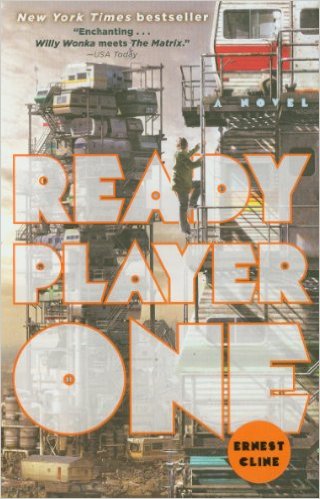
The ancient sage may have also liked the novel, Ready Player One, by Ernest Cline. The book takes place around 2046 when virtual reality is where people spend most of their life. You create your own persona, travel throughout virtual worlds, engage in digital communities, and even wear gear that allows you to see, feel and smell within your virtual surroundings. Not that far off from what we know to be true of our digital realities today. The name of this particular global virtual world is the Oasis, and for many it is their escape. I think the Qoheleth of Ecclesiastes would relate to some of the main character’s opening words: 
“Maybe it isn’t a good idea to tell a newly arrived human being that he’s been born into a world of chaos, pain, and poverty just in time to watch everything fall to pieces. I discovered all of that gradually over several years, and it still made me feel like jumping off a bridge. Luckily, I had access to the Oasis, which was like having an escape hatch into a better reality. The Oasis kept me sane. It was my playground and my preschool, a magical place where anything was possible” (18).
For many of us, we are looking for that escape hatch from reality, whatever that may be for us. Whether the affairs of the world or our own wrestling with whatever causes us angst about family, our children, finances, employment, and relationships with others, we are looking for that magical place where anything, at least some sort of alternative to the absurdity we read and see and experience on a daily basis, is possible. We are looking for relief from vanity and chasing after the wind.

But there is good news laced in this morning’s sermon. There is another Qoheleth who offers the congregation- and whole world- an alternative framing of reality. This Wisdom Teacher assures us of the in-breaking of God’s kingdom in the midst of all that appears to be futile, vaporous, oppressive, hopelessness- mere vanity, a chasing after the wind.  Some even say Ecclesiastes is “the dark background against which the light of the gospel shines forth.” ("Ecclesiastes," New Interpreters Bible. Vol. 5. p. 267.)  


Jesus’ words in Luke 12 reframe the opening poetry of Ecclesiastes and responds to the Qoheleth’s question, “Is there anything new?” with a resounding “yes!”  Jesus as our Qoheleth holds the reality of the despairing world in one hand and the assurance of God’s promised future in the other and pulls them together in his life, death, and resurrection. Jesus then dares his disciples, people like you and me, to  push through fatalism and shift our eyes and ears to the possibilities flying over us and sprouting up beneath us as we love our neighbors as ourselves, advocate for justice in the face of oppression, extend welcome to the stranger, declare the lives of those most marginalized by systems and people in power truly do matter, and do not fret, fear, toil, or spin in the midst of vanity and socio-political delusions. This is what Jesus means when he says to strive for God’s kingdom, the very alternative reality you and I are searching for in these tired days. A better title for today would have been, Beyond Vanity and Absurdity.

Over the course of my nearly 15 years in ministry, I have been blessed to see evidence that the church of Jesus Christ is alive and well, moving beyond vanity and absurdity.  Sure, we have our moments and seasons that even linger for generations. Yes, we may even have fears about the present and future of our faith communities, especially as we become increasingly aware of and anxious about our need to adapt to the changing landscape around us. Certainly, we struggle with conflict and encounter disagreement related to theology and biblical interpretation. We may even contribute to the polarizing rhetoric we know to be empty and void. We could likely write our own rendition of Ecclesiastes 1 on church experience alone, occasionally wondering if our faith communities are merely chasing after the wind.

But the message of Christ this morning is that we are not stuck in vanity or absurdity. Just look around and you will see evidence of God’s people striving after the kingdom of God. In communities where heroine is claiming the lives of local neighbors, there are churches resurrecting community arts programs as means for recovery. In certain urban places where hunger and food insecurity is pervasive, I have seen churches resurrecting nutrition programs, care closets, and urban gardens to provide food for their neighbors. In certain places where those who have been previously incarcerated are looking to utilize their artistic talents, churches are resurrecting their fellowship halls into studios for those engaged in the restorative justice program through Philly Mural arts.

In this church community, you are connecting with local hunger alleviation programs and food cupboards, extending solidarity to parts of our country rebuilding after major floods, sending youth to Presbyterian Youth Triennium to be empowered to "Go" as God's agents of grace.  You then immediately send them the following week to be immersed in conversations about poverty, homelessness, and other justice concerns alongside good friends at Broad Street Ministry. You are making prayer shawls for those who need another burst of support in the midst of difficult medical diagnoses. Children, including my own, are returning home from vacation Bible School not only with a new songs and friends, but also with an understanding that we are called to provide clean water to those who do not have equal access. Friends, your ministry labors are neither unnoticed or in vain. They are also not complete. We must continue to move beyond absurdity and towards God’s kingdom.

So today’s question: what reality will define and shape us as the people of God? Will we be trapped by vanity, fear, and despair and merely look for an escape from this world in light of what has become too overwhelming for us to engage? Or will we be those who follow our Wisdom Teacher, who is Christ, move beyond absurdity as we strive towards the kingdom of God and look for opportunities to serve alongside our neighbors in Downingtown and Coatesville, Honey Brook and Philadelphia, and other parts around the world?

Will our life and witness respond to the Qoeleth’s question, is there anything new?, with the same resounding “yes!” as Christ. May our work and witness near and far, here and everywhere, bear witness to the good news of Jesus Christ. After all, anything else would be mere vanity, a chasing after the wind. Amen.

-------

Poetry as Benediction
Hope upon hope;
         possibility upon possibility
In the midst of the absurdity and vanity,
         is there anything new?
Consider the birds of the air
         the lilies of the field
         do not fret
         do not fear.
Strive for the kingdom God,
         surrounded by the love of God,
         grace of Christ,
         and the fellowship of the Holy Spirit.
        Amen.